



Translating mathematics
Due to their timeless and universal character, mathematics is a subject of choice for translation. Scholars, juggling between different languages, have strived to make scholarly texts available to everyone in the language of culture, sometimes making it possible to save fundamental works. Thus, the history of the translation of mathematical texts includes iconic places, such as Alexandria, Baghdad or Toledo, and stars like Boethius, the Banu Musa brothers or Adelard of Bath. But beware of imprecise transcriptions: the smallest deviation from the original meaning can ruin the entire endeavor. How, then, to translate a technical term, a new concept or a subtle idea into a language whose vocabulary is not sufficiently adapted? Some amusing awkwardnesses have thus come down to us.
All articles in this folder
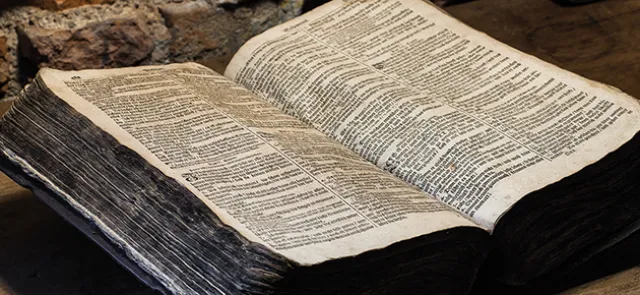
How Europe made Arabic mathematics its own | Tangente
With a passion for mathematics and history, Marc Moyon studies how scientific knowledge and practices travelled from the Greco-Roman world and the lands of Islam to Europe. A skilled translator of mathematical texts, he shares his experience with us.
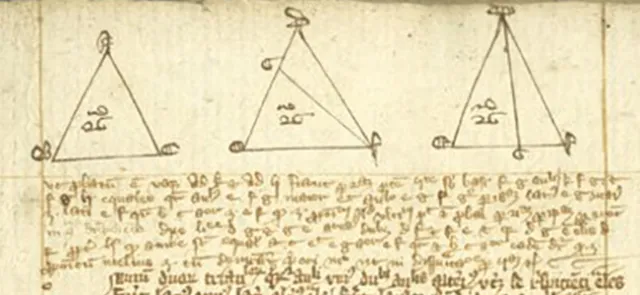
Greek mathematical texts in translation | Tangente
Greek mathematical texts influenced the entire history of mathematics around the Mediterranean. Yet Greek was not always spoken by every scholar. Ancient texts therefore had to be translated to make them accessible to as many people as possible.
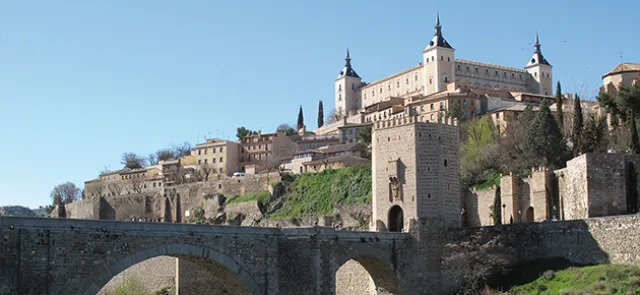
From Baghdad to Toledo: legendary places | Tangente
A great many works from ancient Greece survived and reached a wider audience thanks to their translation into Arabic or Latin. This legacy was made possible by the determination of a handful of rulers who understood the universality of knowledge and the importance of passing it on.

Adelard of Bath | Tangente
Adelard of Bath was one of the translators of Euclid into Latin. He also translated many other mathematical texts from Arabic

Translating concepts: yes, but how?
The names of new concepts and abbreviations often take very different paths as they pass from one language to another, enriching mathematical writing.