



#### **
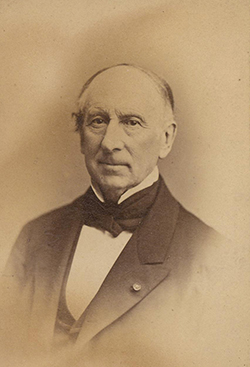
**Augustin-Louis Cauchy (1789–1857) photographed by Charles Reutlinger
The vocabulary specific to complex numbers is the work of several mathematicians across the centuries

Articles recommended for you.

Complex numbers, initially termed "imaginary," were not conceived as we study them today. Above all, they were introduced as tools for solving polynomial equations—and tackling the mathematical challenges that raged across Renaissance Europe.
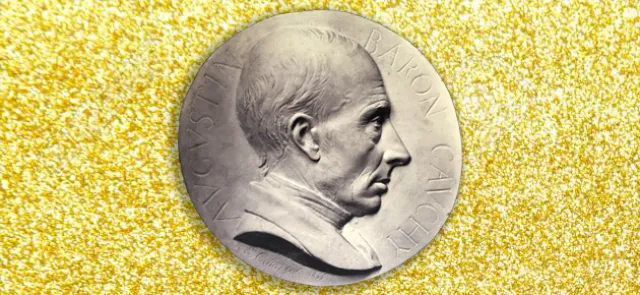
Cauchy is often credited with single-handedly founding complex analysis. The reality is subtler: although Cauchy gave the subject its structure and rigor, he drew on a wealth of earlier research, notably dating back to d’Alembert. Moreover, his involvement was prompted by debates between Laplace and Poisson over whether the use of complex numbers in integral calculations was legitimate. To understand Cauchy’s work, then, we must reconstruct its entire intellectual context.

At barely 25, Cauchy puts the finishing touches to a paper on symmetric functions that is eventually published as two articles. In it, he introduces new concepts, notation and methods, and creates the calculus of substitutions, which will play a central role in the development of group theory.

The development of linear algebra gave rise to new terms, such as "scalar", and revived others, such as "vector".
Discussion
Sign in to post a comment and talk with other readers.
No comments yet. Be the first to respond.