-
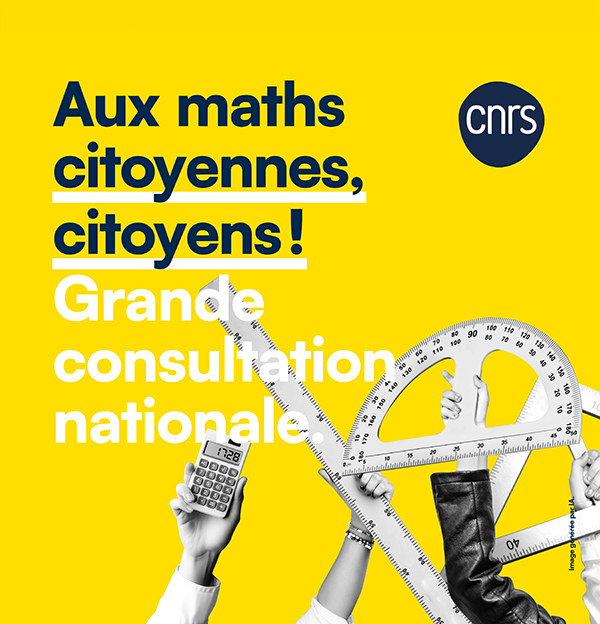
The results of the citizen consultation on mathematics, conducted in the spring of 2025, were announced at the Senate on December 8 that year.
The CNRS was building on the Assises pour les mathématiques, organized in 2022 by the Institut national des sciences mathématiques et de leurs interactions (INSMI), which featured roundtable discussions, talks, prize-giving ceremonies and testimonials centered on the question, "How can French mathematics help tackle the major challenges of tomorrow?" From March to July 2025, 33,000 people took part in this major initiative, although they did not form a representative sample of the population, as managerial and professional groups were overrepresented. Together, they submitted more than one million contributions. The consultation also included 40 workshops held throughout France, bringing together 46 people for six days to tackle the question, "How can access to mathematics be improved for everyone, at every age?"
Mixed feelings
The consultation's main finding is that people's lifelong relationship with mathematics is shaped by their experience at school. Seventy percent of participants see the subject as selective, leading to anxiety during exams or even simple oral quizzes. Participants stressed that those who are not "lucky" enough to feel comfortable with the subject may consequently develop a sense of exclusion or even shame.
Despite this, respondents are aware of the importance of mathematics in everyday life, and 67% consider it indispensable. In addition, 40% would like to resume learning maths as adults, while 90% acknowledge that mathematics plays a key role in scientific, economic and democratic development.
Solutions on the horizon
Since the survey findings highlighted a widespread desire for a more broadly shared mathematical culture, the CNRS aims to make the subject more accessible to everyone, restore people's confidence and give them opportunities to reconnect with mathematics at any age. Working with education stakeholders, it intends to take action to reduce inequality, particularly by encouraging participation among girls and hard-to-reach groups. Furthermore, the CNRS wants to strengthen the place of maths in society, bring scientists and the public together, and support public-outreach initiatives.