Groupes à quatre éléments : C4 et groupe de Klein | Tangente
♦♦ Des groupes à quatre éléments

This article is not yet available in English; the French version is shown.

Articles recommended for you.

The era of so-called "modern mathematics" brings back many memories, some pleasant, others decidedly less so. But does that mean we should throw the baby out with the bathwater?

The essence of modern mathematics is abstraction, especially since the 1930s with the emergence of the concept of structure. But as early as the 1940s a new concept appeared: categories, accompanied by the ideas of functor and natural transformation.

The concept of a group emerged in the early 19th century to solve polynomial equations and very quickly spread to other fields, including those outside mathematics: it allows us to focus on relationships between objects rather than on the objects themselves.

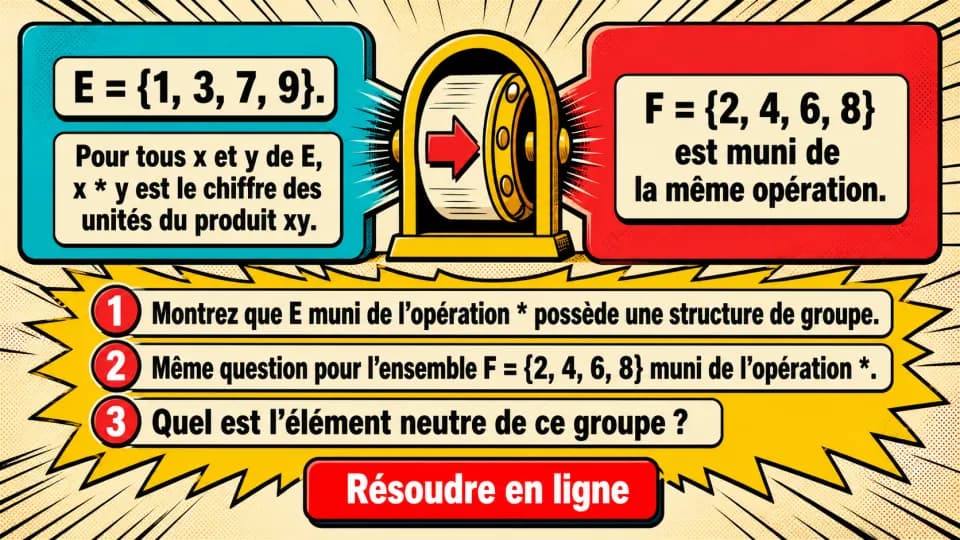
When we first start working with groups, we patiently draw up the tables for those with only a few elements. A one-element group consists solely of the identity element and is therefore unique. Similarly, groups with two or three elements are unambiguously determined. The surprises begin with four elements...