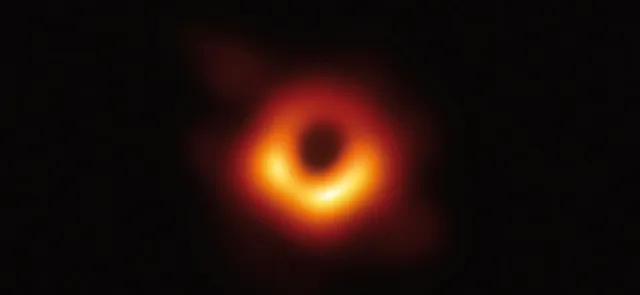
Katie Bouman had already been asked this question in 2016: "How do you photograph an object 54 million light-years away, with a mass 6.5 billion times that of the Sun, from which no light can escape?" A few months later, she described how a team of astronomers, physicists, mathematicians and engineers were developing sophisticated algorithms and working with data generated by a network of telescopes. They predicted that the first image of a black hole would soon be reconstructed. It became a reality in April 2019, when such an image was presented publicly.
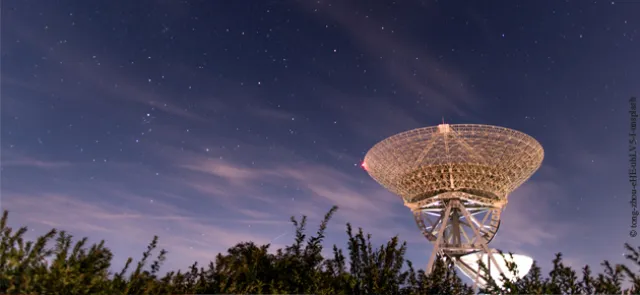
At 29, Katie Bouman was a postdoctoral researcher at MIT in the United States, as well as a computer scientist and electrical engineer specializing in image processing. As part of the "Event Horizon Telescope" project, she wrote one of the algorithms—called CHIRP, for Continuous High resolution Image Reconstruction using Patch priors—that helped fill gaps in the images obtained from eight radio telescopes at six different locations (in Arizona, Hawaii, Mexico, Chile, Spain and Antarctica). Thrust into the spotlight, Katie Bouman nevertheless stressed that "it was not any one algorithm or any one person that created this image, but the incredible talent of a team of scientists from all corners of the globe and years of hard work".