



Jacques Bair
56 articles published in Tangente
 Math for everyoneN°81Feb 16, 2022
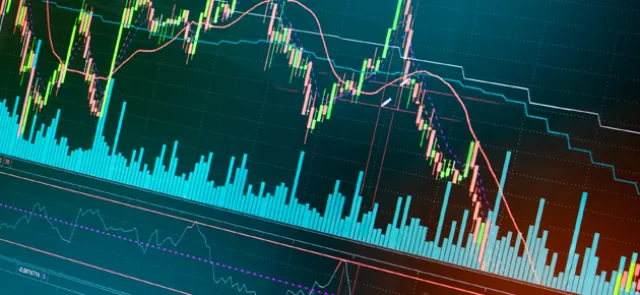
Statistics and probability revisited
The basic statistical concepts of mean, standard deviation, median and median absolute deviation are widely used. We encounter them at school, in the media and in the workplace… All can be constructed from familiar distances, such as Euclidean or Manhattan distance.
Read → History and CultureN°204Feb 15, 2022
Convex geometry
Convex geometry lies at the crossroads of optimization, analysis, topology, combinatorics and, of course, geometry. The graphical and visual interpretations it affords are powerful aids to intuition. Yet fundamental questions remain open.
Read → History and CultureN°204Feb 14, 2022
A modern theory with ancient roots
It was during the twentieth century that convexity emerged as a mathematical discipline in its own right. Before then, eminent mathematicians had occasionally glimpsed the potential value of this notion in geometry and analysis.
Read → History and CultureN°81Feb 14, 2022
A distance between mathematicians
Have you heard of the Erdős number, which measures how "close" a researcher is to Hungary's most famous mathematician through successive collaborations?
Read → Math for everyoneN°81Feb 14, 2022
Interpreting blood test results
In medicine, an atypicality index defined using specific distance measures can determine whether blood test results are considered pathological.
Read → Math for everyoneN°80Nov 18, 2021
An example of a group in the social sciences
A simple, classic, real-world application of the mathematical concept of a group can be found in social anthropology. It was brought to light by the anthropologist and ethnologist Claude Lévi-Strauss, working with the mathematician André Weil.
Read → History and CultureN°79Aug 24, 2021
The "spiritual grandfather" of financial mathematics?
In 1900, the young French mathematician Louis Bachelier defended his doctoral thesis on Théorie de la spéculation (Theory of Speculation) at the Sorbonne.
Read → N°197Dec 16, 2020
Brainstorming and hackathons
More heads are better than one. This principle underpins brainstorming and hackathons—intensive computer-programming events—both widely used in data science.
Read → History and CultureN°197Dec 02, 2020
Toward "open science"
Mathematical practice is undergoing profound change. Researchers are organizing, established ways of working are being questioned, and bringing knowledge to the general public has become a key concern. A new model—"open science"—is emerging.
Read → History and CultureN°197Dec 02, 2020
The early days of collaborative research
Until very recently, mathematicians worked and published alone. Now, thanks in part to the development of modern communication tools, it is not uncommon to find research papers co-authored by more than four people. At Tim Gowers's instigation, several websites have enabled collaborative research.
Read →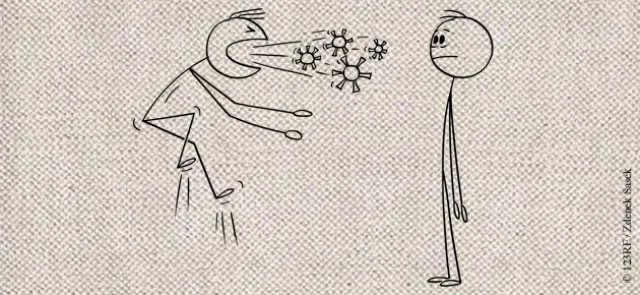 Math for everyoneN°194May 20, 2020
Covid-19: mathematics to the rescue
What can epidemiological models contribute during a pandemic such as Covid-19? Can they justify measures that are difficult for the public by quantifying and explaining their direct effects on the spread of the disease?
Read → Math for everyoneN°194May 19, 2020
A Polymath project on the coronavirus
The mathematical community is joining the fight against the pandemic.
Read →