



Circular reasoning
Georg Cantor and his set theory shook the foundations of mathematics by highlighting circular reasoning, that is to say, self-referential. At the turn of the 20th century, his paradoxes emerged under the pen of Burali-Forti, Russell and Richard, throwing Frege into dismay. Kurt Gödel showed that certain assertions cannot be proved or disproved within a given axiomatic framework, bringing a negative answer to a famous problem posed by Hilbert. Self-reference is also found in literature, painting, sculpture and… in the press where, intentional or not, it makes us smile.
All articles in this folder
The paradoxes that shook mathematics
What a devilish theory Georg Cantor created with set theory! So thought some mathematicians at the turn of the 20th century, when a series of paradoxes seemed to threaten the foundations of mathematics. This prompted a reassessment of the role of logic.
Disputes and paradoxes | Tangente
Even the greatest mathematicians have fallen into the traps laid by logic and its paradoxes.
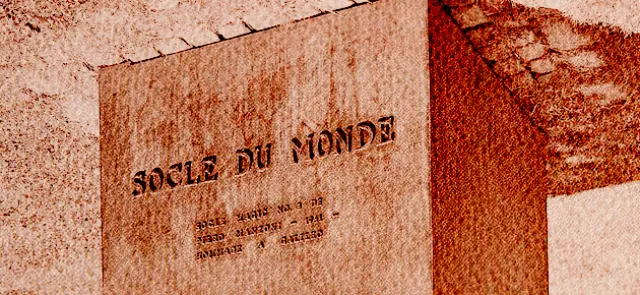
When works speak for themselves | Tangente
Advertising regularly makes use of it, as do graphic designers and artists. Self-reference has become a genre in its own right, appealing not only to our eyes but to all our senses! Let's take a wild tour of this seemingly limitless creativity.
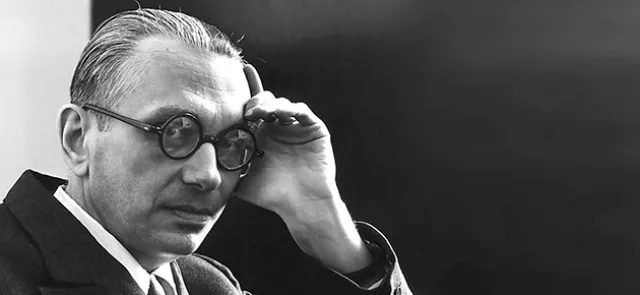
Gödel's incompleteness theorems
In mathematics, although there are many conjectures and hypotheses, it is generally assumed that any well-formed statement must have either a proof or a refutation. Kurt Gödel showed that this is not so. His proof uses self-reference.
Pure and impure self-reference | Tangente
Self-reference is not "pure". It must be tied to an object, a situation or a concept—here, for instance, artistic creation, and photography in particular.
Self-reference at every level | Tangente
We do not always pay attention to them, but self-referential sentences and turns of phrase surround us every day!