



Covid-19, a mathematical approach
Can mathematics also save lives? The Covid-19 pandemic surprised us with its virulence but also with the speed of its spread. Many statistics, sometimes contradictory, have been published. Mathematical models allow us to understand, study, and predict the phenomena around us. But what can be their contribution when so many unknowns remain? By quantifying and explaining their direct consequences on the spread, do the models justify certain measures to be taken, however painful they may be? The mathematical tools used to understand the complexity of living things remain only approximations that can point to explanatory paths, but cannot replace a real understanding of the phenomena. The alliance of mathematics and other sciences will, let us hope, make it possible to make the right decisions.
All articles in this folder

The 93: Covid hotspot or bad math? | Tangente
A figure published by the Institut national de la statistique et des études économiques (Insee) and picked up by the media painted a catastrophic picture of public health in Seine-Saint-Denis (93).

Coronavirus Polymath project | Tangente
The mathematical community is joining the fight against the pandemic.
Robert protocol and COVID-19 tracing | Tangente
The problem posed by asymptomatic people, who are the most likely to transmit the virus, is a major challenge in the fight to curb the epidemic.

How to inform yourself intelligently about Covid | Tangente
Several web pages provide an overview of the available scientific information on the current epidemic.

Covid: an equation with too many unknowns | Tangente
The Covid-19 pandemic took the world by surprise, both through its virulence and the speed of its spread. A wealth of statistics, sometimes contradictory, has been published. Governments have introduced measures that often differ from one country to another. A range of medical treatments is being used. Can mathematics help us make the right decisions?

Epidemiological statistics | Tangente
Despite what its name suggests, epidemiology is a broad discipline. Its scope now extends beyond the study of infectious diseases to encompass all human diseases and disorders, whether chronic, genetic, environmental or behavioral, as well as accidents.
The birth of epidemiology | Tangente
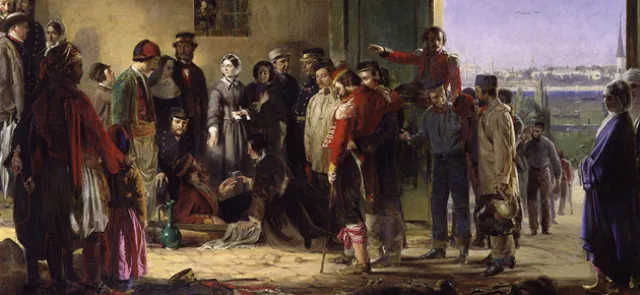
For more than three centuries, major pandemics have prompted statisticians to quantify mortality data and produce death forecasts. How has this helped reduce the impact of such disasters?
Covid-19: mathematics to the rescue
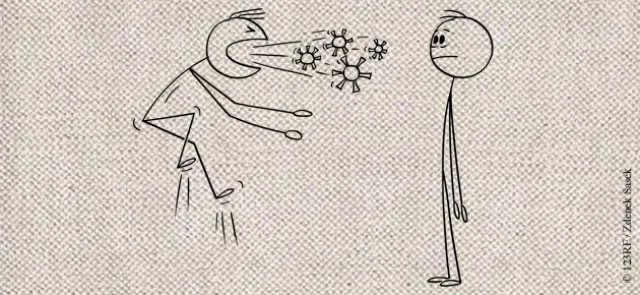
What can epidemiological models contribute during a pandemic such as Covid-19? Can they justify measures that are difficult for the public by quantifying and explaining their direct effects on the spread of the disease?

Real-time mathematical modelling | Tangente
The current pandemic reminds us that mathematical models are built up in stages, from scientific assumptions and the available data. They are not objects in the real world, but abstractions. Their reliability can be established only by comparing them with reality.