



Digital Arts
Born with the development of computer science, digital art has enabled artists, by appropriating algorithms and programming languages, to explore new fields and to "dialogue" with their audience through abstract creations. Initially exploiting the use of repetitive patterns, this new art has opened, as technological opportunities arose, to fruitful and unexpected collaborations. Mathematics, omnipresent, once again shows that it can contribute to harmony. Iterative processes, simulation of randomness, exploration of numbers and combinations, use of analysis in music, artists play with these concepts. This confluence is also an opportunity to question the very notion of creation. Is writing a computer program part of it? And what about the increasingly numerous works generated by artificial intelligence?
All articles in this folder
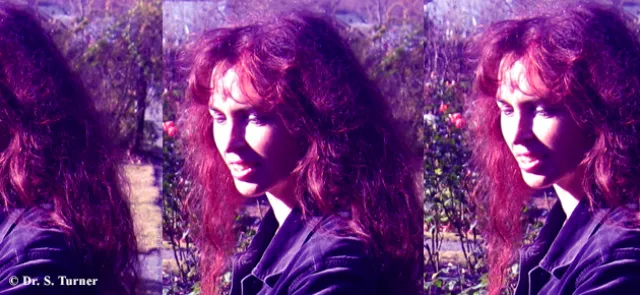
Teja Krašek in Escher's footsteps | Tangente
Born in Celje, Slovenia, Matjuska Teja Krašek (pronounced "Teyla Krashek") lives and works in Ljubljana. Her work draws on her fascination with symmetry, fractals and, more broadly, the beauty she sees in mathematics. She agreed to share her passion with us.
Towards vector art: art and digital technology | Tangente
If contemporary art has been marked since the twentieth century by a succession of avant-garde movements, most often breaking with their predecessors, today's digital art is no exception.
Art, virtual tokens and blockchain | Tangente
The best-known blockchain is used to verify ownership of bitcoins in a way that is, in principle, tamper-proof.
Digital technology and music: benefits and limitations | Tangente
The introduction of digital technology into the arts was a genuine revolution. In music, that revolution took many forms.
Xenakis’s UPIC: mathematics and music | Tangente
One of the pioneers of the digital revolution in music was the composer Iannis Xenakis (1922–2001). Music has always had an underlying structure closely related to mathematics, but with a composer like Xenakis, this synergy found concrete expression.
Art and mathematics: creative encounters | Tangente
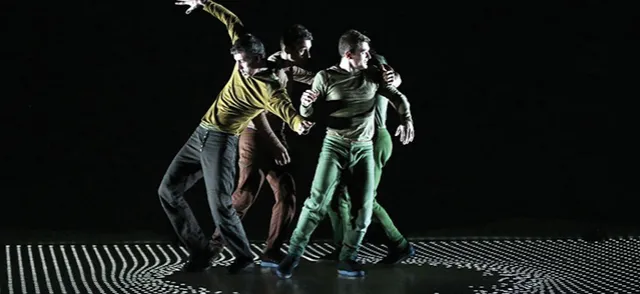
Digital art takes many forms, surprising us with the new territory it explores. It can be 2D or 3D, static or moving, passive or interactive. It lies at the intersection of art and technology. How have artists moved from a mathematical concept to creating a work of art?