"Digital": beyond a reductive view
-----------------------------------------------
Immersion, interactivity, augmented reality, artificial intelligence: all are concepts that seek to overturn the traditional relationship between artists and their audiences, as well as the very notion of a work of art.
If we go by these definitions, now foregrounded in virtually all discussion of digital art, the break with traditional art seems complete.
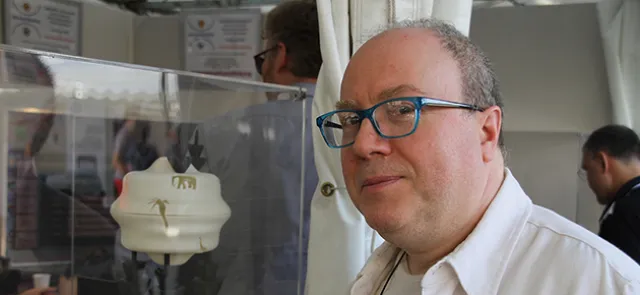
The French theorist and digital-arts pioneer Edmond Couchot (1932–2020) did not hesitate to write: "'Computer art' (of the 1960s) is now a thing of the past. The age of the pioneers is over."
Yet why focus solely on interactivity, overlooking the fact that the spectacular growth in computing power also gives computers an unprecedented ability to generate complexity—an ability that it is now precisely up to the successors to the "pioneers" to harness—even if "interactivity" and "the digital generation of highly complex forms" seem at first sight to be mutually exclusive?