



Operations over time
Today, schoolchildren still learn to perform calculations "by hand" by setting out their arithmetic operations on paper. These well-known algorithms are not the only ones that exist. Several techniques have evolved over time; the ones we are taught result from choices that may seem arbitrary. In Antiquity, it was abacuses that were used to represent numbers and add them. In the 17th century, John Napier developed his famous rods for performing multiplications. All these tools had to solve the same major problem: handling carries!
All articles in this folder
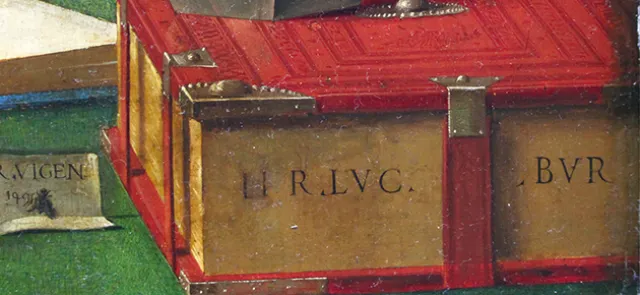
Multiplying with rods | Tangente
Before the advent of modern technology, techniques or tools had to be devised to perform the basic calculations required by craftspeople, engineers and everyone else! From John Napier to Édouard Lucas, mathematicians distinguished themselves in this pursuit.
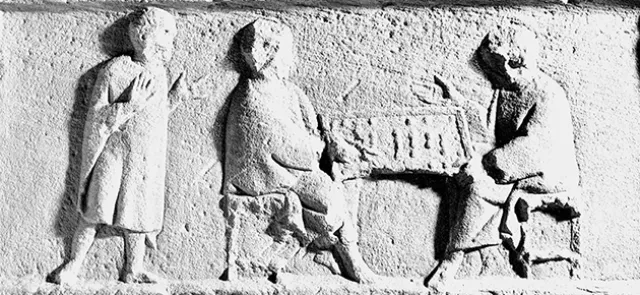
Calculating? With calculi, of course! | Tangente
It is hard to believe that the multiplication and division methods we learn at school did not become universally adopted in the West until the 18th century. So how did people calculate before then? They used calculation aids such as counting boards.

Japanese multiplication | Tangente
How can you multiply without a calculator—or even knowing your multiplication tables?
Let's grapple with division | Tangente
The four arithmetic operations that we all learn to set out so conscientiously in our school notebooks are “elementary,” aren’t they? Yet the methods of addition, subtraction, multiplication and division have not always been presented as they are today in Western countries!