



Powers of numbers
What do Fermat's Last Theorem, Catalan's conjecture, counting rice grains on a chessboard, and Waring's problem have in common? They all involve powers, and they have occupied (and still occupy!) mathematicians for sometimes centuries. Numbers lend themselves well to this 'fifth arithmetic operation' that is raising to a given power. From then on, experiments flourished, from which some of the most famous conjectures and some unexpected applications would emerge. In cryptography, ensuring the confidentiality of exchanges requires using very large numbers, and exponentiation is a tool that makes it possible to obtain them with a moderate cost in terms of computation time.
All articles in this folder

The fifth operation
Although the four operations—addition, subtraction, multiplication and division—are studied from elementary school onward, students must wait until their third year of secondary school to discover a fifth: raising a number to a power.
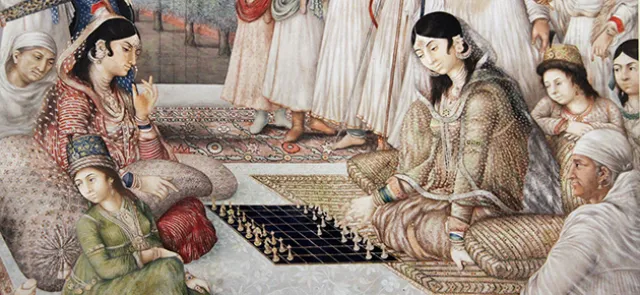
From Sissa to RSA
What use is there in raising numbers to powers, except for the fun of uncovering some arithmetical property of the natural numbers? Unexpectedly, this ancient computational art lies at the heart of modern cryptography and secure data transmission.

The famous number 1729: Hardy and Ramanujan | Tangente
The smallest integers that can be written as a sum of two cubes in three different ways, then four different ways, and so on, are often called taxicab numbers.

Catalan's problem
In 1844, Franco-Belgian mathematician Eugène Catalan published his famous conjecture in Crelle's Journal.

When Euler gets it wrong
Even the greatest mathematicians sometimes make mistakes. It is only human! It even happened to one of mathematics’ legendary figures, the great Leonhard Euler, in connection with sums of powers.
Waring's problem: 250 years of research | Tangente
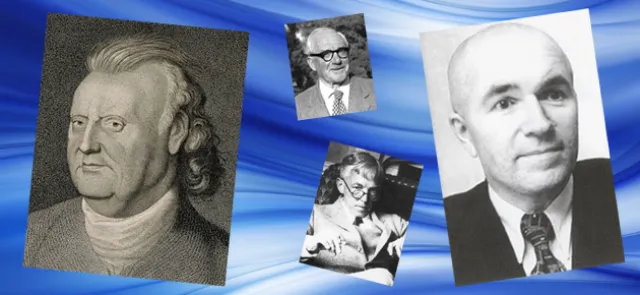
Since the 18th century, a famous problem—Waring's conjecture—has challenged mathematicians. Every integer N is a sum of at most four squares, or of at most nine cubes. Likewise, given an integer n, can every N be expressed as a sum of at most g(n) nth powers, and if so, what is the smallest possible value of g(n)?