In Europe, the notation we now use when raising a number x to the power n, namely *xn*, emerged and became standardized only gradually over the centuries.
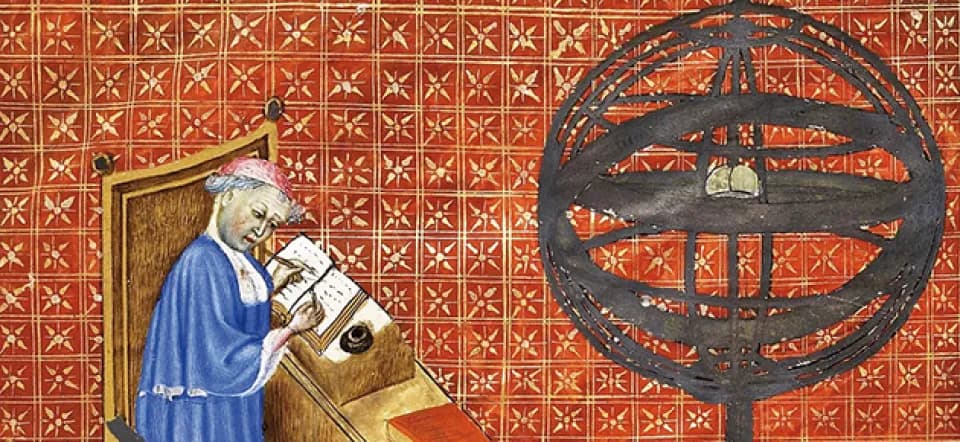
As early as the 14th century, the mathematician Nicole Oresme used powers, including fractional exponents, and set out the rules for calculating with them. A little later, in the 15th century, the mathematician Nicolas Chuquet used exponent notation in his Triparty en la science des nombres (1484), and defined powers with exponent 0 (except "00") and powers with negative exponents. The German mathematician Michael Stifel, author of Arithmetica integra, then introduced the term "exponent" and extended the corresponding notation to negative exponents.
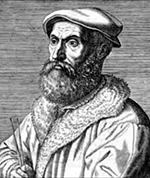
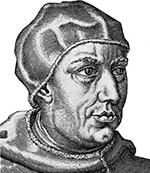
Nicolas Chuquet (c. 1445–c. 1488)