




Sum the series
This issue is not fully translated into English yet; only translated content is shown.
Read the French versionAll folders in this issue
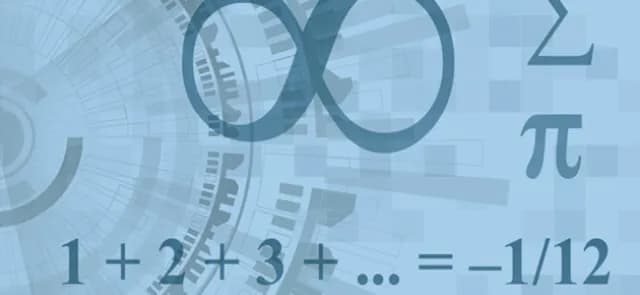
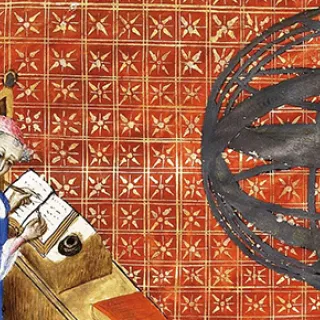
Summing series, even divergent ones
Infinite sequences of numbers have always puzzled mathematicians, who have consensually developed the notion of convergence and limit. But everything changed when they became interested in the successive sums of these sequences, to which they gave the name of series. Convergent series (the "nice" ones), studied by all those destined for a scientific career, pose no problem. They allow defining the sum of an infinite number of terms, as long as the "partial sums" converge to a limit. But the others, officially "divergent" (the "wicked" ones), were at the origin of very different, sometimes astonishing approaches, creating true philosophical conflicts between famous scientists. Euler, Abel and some pioneers ventured to imagine defining sums for them, finding some wonders… which today are the subject of a beautiful theory!
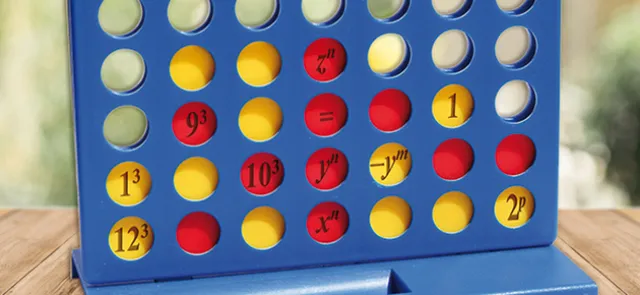
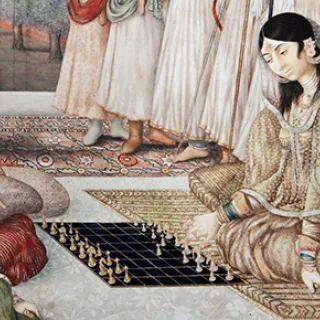
Powers of numbers
What do Fermat's Last Theorem, Catalan's conjecture, counting rice grains on a chessboard, and Waring's problem have in common? They all involve powers, and they have occupied (and still occupy!) mathematicians for sometimes centuries. Numbers lend themselves well to this 'fifth arithmetic operation' that is raising to a given power. From then on, experiments flourished, from which some of the most famous conjectures and some unexpected applications would emerge. In cryptography, ensuring the confidentiality of exchanges requires using very large numbers, and exponentiation is a tool that makes it possible to obtain them with a moderate cost in terms of computation time.
All articles in this issue
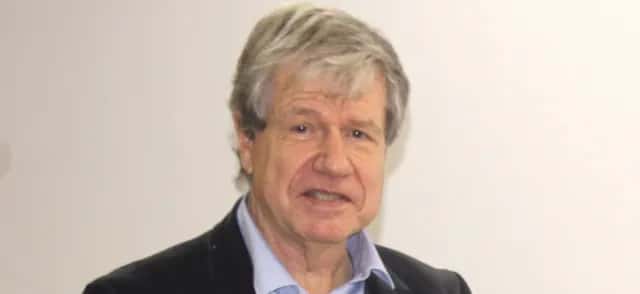
Hervé Lehning:
It is impossible to sum up the scientific and educational work of a man such as our colleague and friend Hervé Lehning. More than a thousand articles bear his name! One way to gain a sense of the man is through his vast body of writing.

François Plantade:
For Tangente, François Plantade looks back at the life of Niels Henrik Abel, a 19th-century Norwegian mathematician who remains little known despite his major influence on the mathematics of his day. He died at 26, and his work only began to gain recognition toward the end of his life.
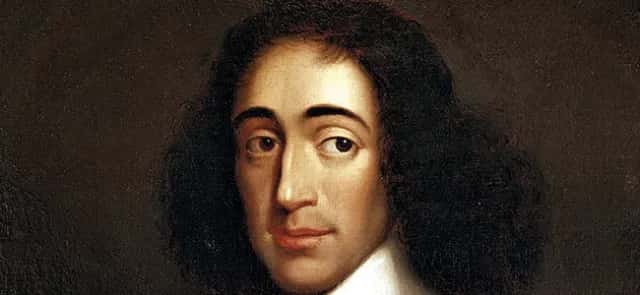
Spinoza and mathematical order
The Dutch philosopher Baruch Spinoza drew inspiration from mathematicians’ methods of inquiry and exposition in his "search for truth." Otherwise, he maintained, we prove nothing, merely supporting preconceived theses with plausible arguments.
Grenoble math center: local authorities pull out
La Grange des Maths is an association founded in 2015 to renovate an old barn in Varces (Isère) and turn it into a place where people can meet and share mathematics.
Ada Lovelace in the spotlight
Every year, on the second Tuesday in October, an event celebrates women innovators in computing. In 2022, a postage stamp bearing Ada Lovelace's likeness was issued.
Sédimath: a new initiative for promoting mathematics
A new mathematics outreach initiative has just been launched: Sédimath, an online seminar organized by Aurélien Alvarez (ÉNS-Lyon) and Élise Raphael (Université de Genève, Switzerland).
AI improves the general algorithm for matrix multiplication
Every science student knows how to multiply two matrices. So why call it an "open problem"?
Charles V's letter, readable at last
An encrypted letter from Charles V (1500–1558), Holy Roman Emperor, addressed in 1547 to Jean de Saint-Mauris, his ambassador to the king of France, and housed in the autograph collection of the Bibliothèque Stanislas in Nancy (Meurthe-et-Moselle), has just been not merely read but deciphered. Long passages in the letter are encoded.
A "maths special" issue
La Jaune & La Rouge, the monthly magazine of the École polytechnique alumni and graduates association (AX), devotes its February 2023 feature section to mathematics.