



Quantum mechanics
The relativistic revolution had already dealt a blow to Newtonian theories. The case seemed settled: physicists finally had "the great universal theory" that would allow them to methodically explore the universe, from the infinitely large to the infinitely small. The infinitely large, perhaps! But the subatomic world still obstinately refuses to submit to classical laws. New theories reign supreme in these realms. Mathematics was called upon to come to the rescue in order to express, formalize and explain the many phenomena, counter-intuitive to our senses and our scales, that occur in quantum mechanics.
All articles in this folder
The advent of a new physics
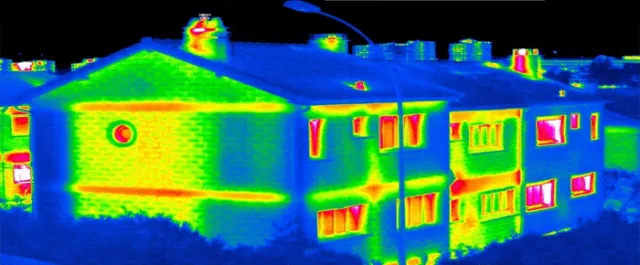
It took a great deal of questioning, rethinking and controversy for a new, "quantum" mechanics to prevail—one capable of explaining certain subatomic phenomena that classical physics could not then describe. Much ground remains to be explored.

Indispensable symmetry groups
Since Galileo and Newton, symmetries have played an important role in the development of physical theories. A symmetry can be identified with the invariance of a structure under a transformation.
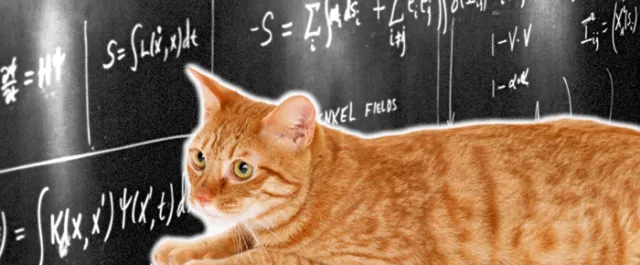
Erwin Schrödinger's cat
In its century of existence, quantum physics has proved extraordinarily effective and has never been found wanting. Yet many difficulties remain when it comes to interpreting it. One emblematic example of its strangeness is a famous feline thought experiment.

A point charge
A point charge is a source of mystery, like an electron with charge e in a vacuum.

Dirac and distributions
Distributions generalize the concept of a function to account for discontinuous phenomena in physics.

The unification of physics through mathematics | Tangente
Physicists have two dreams. The first is to find a beautiful equation. The second is for that beautiful equation to describe all of physics. The Standard Model, string theory and loop quantum gravity are all candidates for a "theory of everything."