



Should the bac be abolished?
The bac, created in 1808, is "a social and political institution," as sociologist Émile Boutmy already wrote in… 1899. If it was a benchmark, both in university and social terms, until the mid-20th century, it no longer plays this role, devalued by its level, in constant decline, and by its growing but increasingly artificial success rate. Yet it has its defenders, in a world where profound reforms are not the order of the day, and where, as Jean Dhombres explains regarding mathematics programs, one prefers to modify the existing through small touches that are juxtaposed until there are no longer any true guiding principles. This is what will feed a sensitive case!
All articles in this folder

APB software: post-bac placement algorithm | Tangente
A software program assigns students who have just passed the baccalauréat according to their preferences. But the opacity of how it works leaves room for a number of concerns.

Abolishing the baccalauréat: arguments and issues | Tangente
Created in 1808, the baccalauréat remained both an academic and a social landmark until the mid-20th century. It no longer plays that role, devalued by steadily falling standards and a rising but increasingly artificial pass rate. Should we not move on?
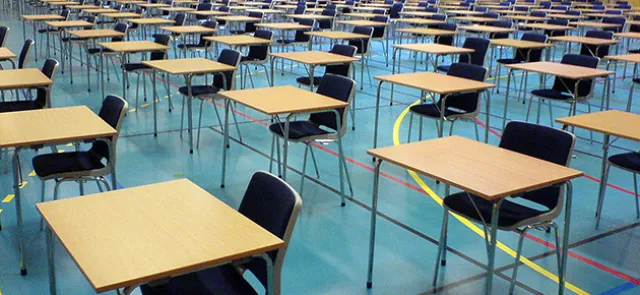
Above all, let's keep the baccalauréat: in defence of a republican examination | Tangente
It is easy to yield to the siren song of those who discredit the baccalauréat to make it easier to abolish. Yet a majority of people in France want to preserve this symbol of "republican elitism".
From Euclid to Bourbaki: perpetual reform
Mathematics has undergone waves of reform in the past, is undergoing them now, and will continue to do so. This applies to schools of mathematical thought and major research movements, but also to elementary mathematics—the mathematics taught in secondary schools in most countries around the world.