



Structuring mathematics
The multiplication of mathematical discoveries leads, at the end of the 19th century, to the need for a structuration that involves questioning the foundations. The many paradoxes constructed within the framework of old theoretical systems lead to rethinking the definitions of various concepts previously perceived intuitively, such as infinity, sets, numbers… The work of Euclid having opened the way to an axiomatic approach, this is systematized throughout the 19th and 20th centuries with the work of Cantor, Hilbert, Peano, Russell, Gödel among many others. This approach is made possible by the formalization of logic, which results in the automatic processing of reasonings, opening the way to modern computer science.
All articles in this folder
 Podcast
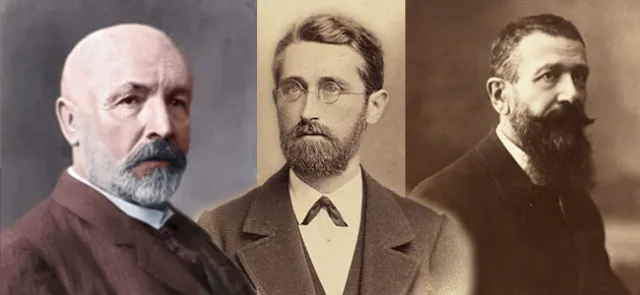
A panorama of set theory | Tangente
Work on the notion of infinity led to paradoxes. This forced mathematicians to formalize set theory. Progressive axiomatization led to the current ZFC system, which nonetheless remains subject to various shortcomings following the work of Kurt Gödel and Paul Cohen.
 Podcast
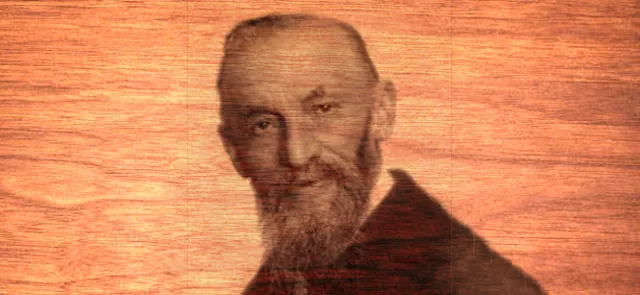
Giuseppe Peano and formalism | Tangente
The Italian mathematician Giuseppe Peano made major contributions to logical formalism by developing a symbolism for transcribing ordinary mathematical language. He also contributed to mathematical formalism by constructing systems of axioms for various fields.
 Podcast
The origin of mathematical rationality | Tangente
Formalization originated in ancient Greece with the project of constructing a coherent mathematical edifice, of which Euclid is the foremost representative.
 Podcast
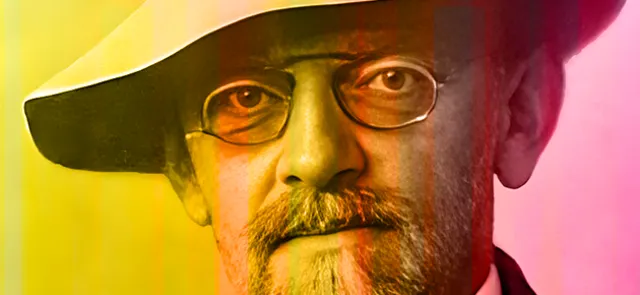
David Hilbert's overhaul of geometry | Tangente
Though Euclid's axiomatization remained in force for a long time, it was amid the ferment of the German academic world in the nineteenth century that mathematicians began to feel it needed to be rebuilt from the ground up. David Hilbert took on the task in 1899.