



The great conjectures
What do we mean by the term 'conjecture'? How have they advanced mathematics? Mathematicians don't like a result resisting them: they regularly tackle the search for it until they find a solution. Fermat's Last Theorem kept the mathematical world in suspense for three and a half centuries. However, there are many other more or less famous conjectures, pending (Goldbach or the Riemann hypothesis), disproved or solved (some even very recently). Discover how mathematics prodigy Terence Tao proved Erdös' discrepancy conjecture!
All articles in this folder
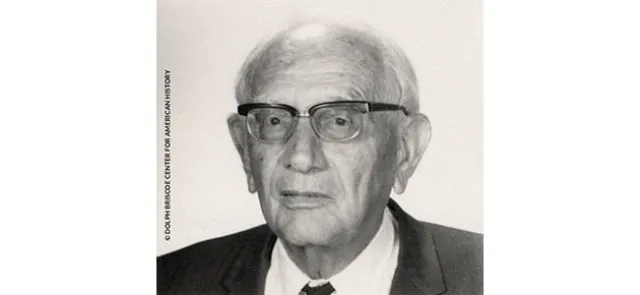
Plausible conjectures… that turn out to be false!
We often assume that the only mistakes good mathematicians make are trivial slips caused by momentary inattention, such as errors in simple calculations. Yet some have put forward mathematical conjectures that proved false—sometimes spectacularly so.

The engine of mathematics
Mathematical progress owes much to conjectures, large and small, that challenge mathematicians. This was true long before Landon Clay and others offered million-dollar prizes: conjectures are the engine of mathematics.

Of machines and men: Catalan and Mihailescu | Tangente
Little stories about conjectures.
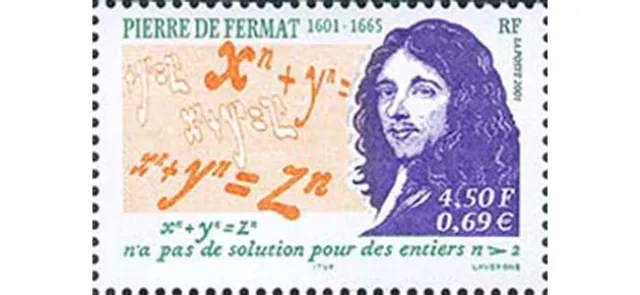
Conjecture, conjecture... something will always come of it
Conjectures are especially famous when they have simple statements and resist mathematicians’ efforts for a long time. They give mathematics an air of mystery and bring great renown to those who solve them, but above all to those who first formulated them, such as Fermat and Goldbach.

Tao solves Erdős's discrepancy conjecture | Tangente
Terence Tao is one of the great "problem posers" of his time, since a photograph that went around the world shows him, at ten years old, already at work with the famous Hungarian mathematician.

Yesterday's conjectures, today's progress | Tangente
Egyptian fractions, like Einstein's relativity, provide the subject matter for conjectures that have only just been proved. The strange abc conjecture, simple to state, has just been resolved... if the proof put forward by Mochizuki turns out to be correct.