



The major concepts of economics
We only talk about it, without necessarily knowing what it covers! Economics studies the production and exchange of consumer goods, at the base of most human activities. Barter in early societies developed into a complex system. It is important to understand the essential concepts, constantly mentioned but whose meaning is often unknown: money (increasingly virtual), inflation, GDP, and the main indicators that structure and condition the health of states and citizens.
All articles in this folder
The saga of economic indicators 2 | Tangente
What does the consumer price index—the famous "housewife's shopping basket"—really measure?
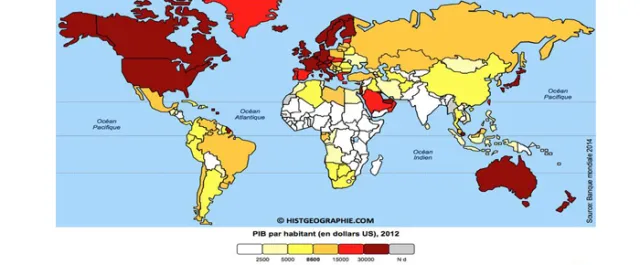
Understanding gross domestic product
There are many ways to measure a nation's wealth. Calculating gross domestic product is one of them, but other, complementary indicators are also used.

The poverty threshold
Most developed countries have policies to help the poorest members of society. This raises the question of what we mean by "poor." Should the definition be absolute or relative? Should it refer only to income, or should assets and place of residence also be taken into account?
When maths divides economists | Tangente
Over the past few decades, several disputes have punctuated relations between economists and mathematicians.

Money and inflation: two inseparable concepts
The desire for wealth fuels many people's ambitions and sometimes dictates their behavior. While no one now doubts the usefulness of money in our modern way of life (!), who knows its history? And how is money linked to inflation?