



The thousand and one lives of Benoît Mandelbrot
Mandelbrot understood that, far from being mere mathematical curiosities, fractals, these self-similar objects, could constitute a powerful description of vast fields of the real world. Thus he offered a new perspective on an entire branch of mathematics, while showing how relevant fractal models could be for the study of nature or for modeling stock market fluctuations. But if Benoît Mandelbrot's name is associated with fractals, particularly the one bearing his name, we often forget that he also worked in many other fields: aerospace, information theory, linguistics…
All articles in this folder

Mandelbrot, a free spirit | Tangente
In the centenary year of his birth, we look back at the life of Benoît Mandelbrot, the "father of fractals": those strange geometric entities with which he adorned mathematics and which he managed to uncover even in nature.
The Mandelbrot–Zipf–Estoup law
The polymath Benoît Mandelbrot took an interest in many subjects before becoming famous for his research on fractals.
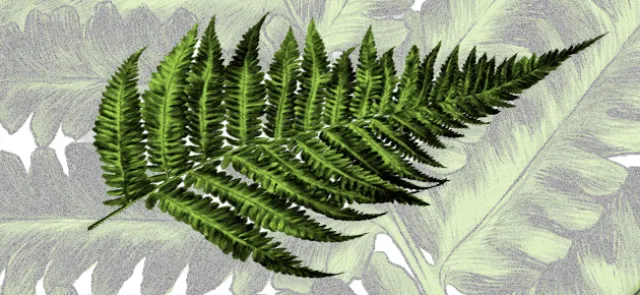
The man of fractures
For millennia, straight lines, circles, parabolas, and other smooth surfaces had reigned supreme and unchallenged over geometry. Then Mandelbrot unleashed the "mathematical monsters" of the early 20th century, transforming our picture of the world forever.
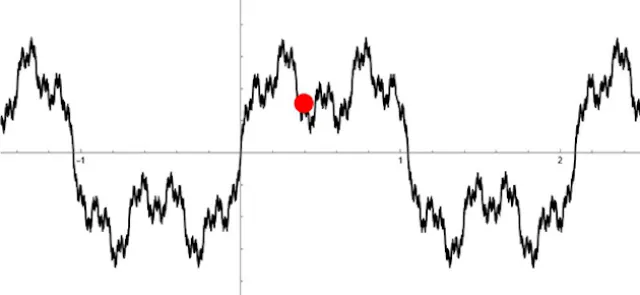
Fractal dimension
The construction of fractal objects called for new definitions of distance.

Beyond Gauss in finance | Tangente
Gaussian curves are unsuitable for modelling risky financial assets such as stocks. To overcome this problem, Benoît Mandelbrot introduced the concept of a multifractal measure and generalized Brownian motion.