La façon dont un mathématicien énonce un résultat permet parfois de saisir ses hésitations face à un concept devant lequel il a des raisons d'être précautionneux. Un cas d'école de l'évitement de l'infini figure dans un résultat fondamental de l'arithmétique apparu pour la première fois chez Euclide.
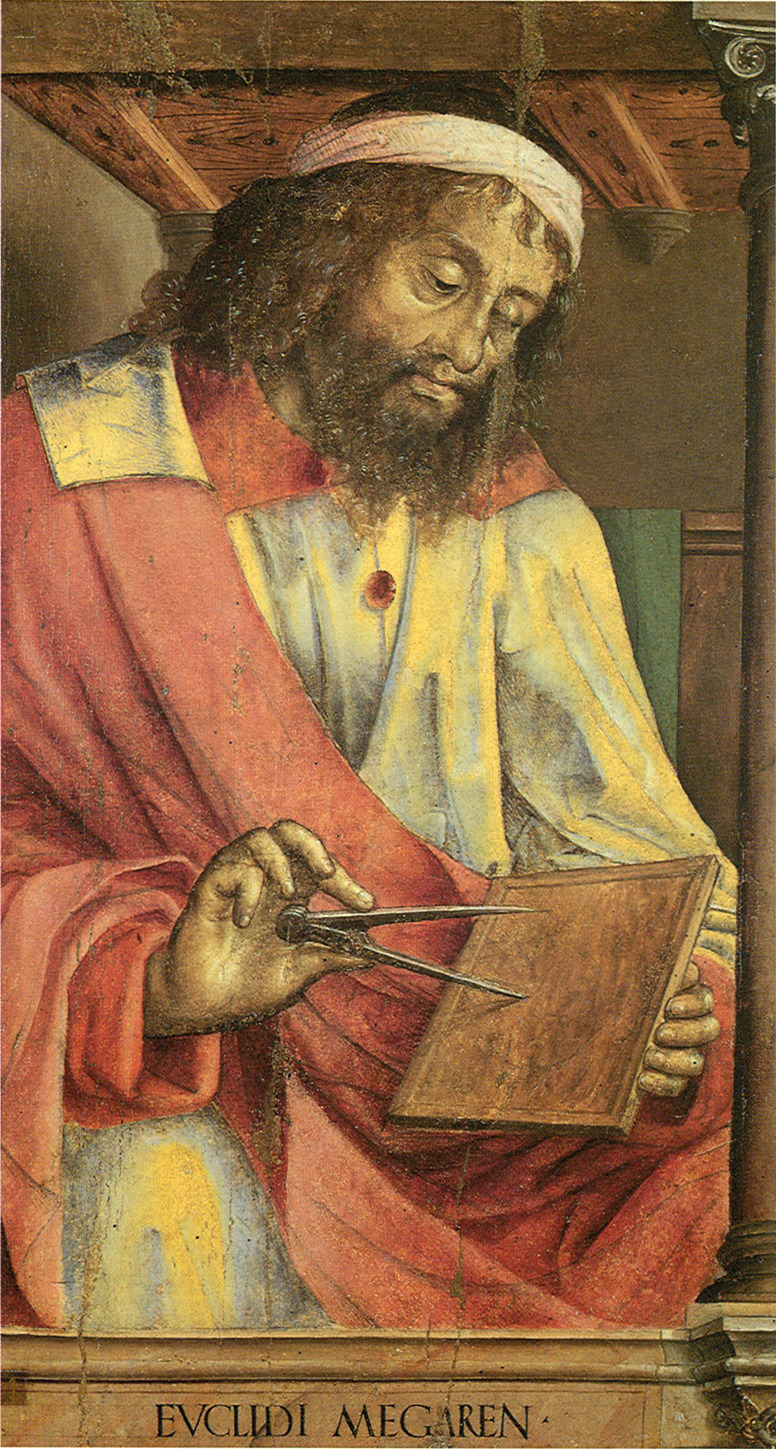
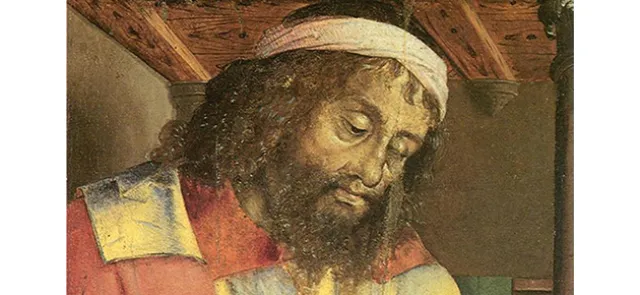
Portrait imaginaire d'Euclide par le peintre flamand Juste de Gand, vers 1474.
L'arithmétique étant historiquement la science des nombres entiers, on voit mal comment y éviter tôt ou tard une confrontation avec l'infini. Certes, dans un premier temps on peut faire comme si le problème n'existait pas. Après tout, il n'y a pas besoin de se poser des questions sur l'infini pour démontrer que la somme de deux entiers pairs est un entier pair, par exemple. Mais à mesure que les résultats se font plus fins, les démonstrations plus longues et les concepts plus précis, il devient de plus en plus difficile de ne pas voir l'éléphant dans la pièce : les nombres entiers étant en nombre infini, vient un moment où il faut faire avec.
Un cas où l'embarras devant l'infini est particulièrement palpable est celui d'un énoncé absolument essentiel en arithmétique : le fait qu'il existe une infinité de nombres premiers.
Rappelons qu'un nombre est premier dès lors qu'il n'est divisible que par lui-même et par 1 (le nombre 1 n'étant pas lui-même considéré comme premier). La liste des nombres premiers commence donc par 2, 3, 5, 7, 11… L'importance des nombres premiers tient notamment au théorème fondamental de l'arithmétique : tout entier naturel s'écrit de façon unique comme produit de nombres premiers. C'est ainsi que si les entiers étaient des molécules, les nombres premiers en seraient les atomes, le produit des entiers leur tenant lieu de liaison chimique.