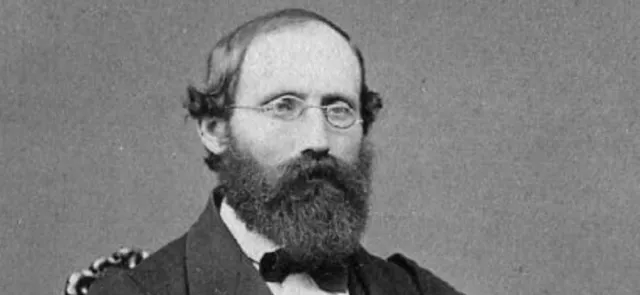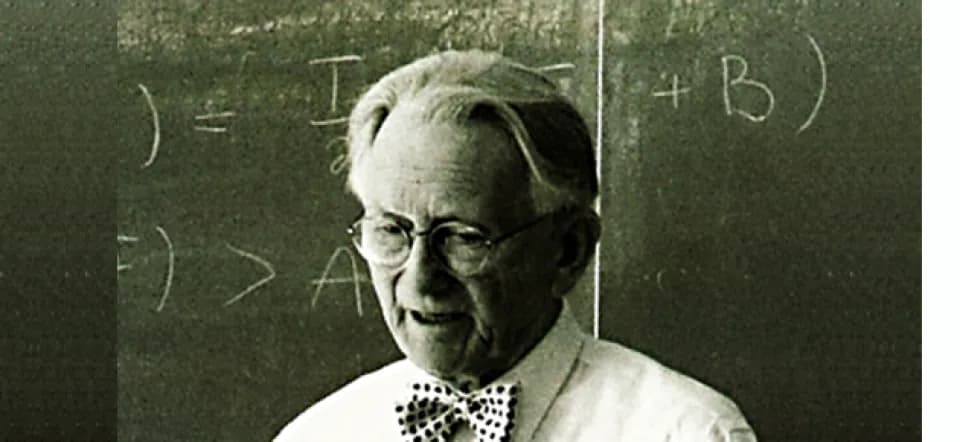
The Norwegian mathematician Atle Selberg.
Traditionally, prime numbers are defined as numbers with no divisors other than themselves and 1. To exclude 1, the definition is now often stated as follows: a prime number is an integer with exactly two divisors.
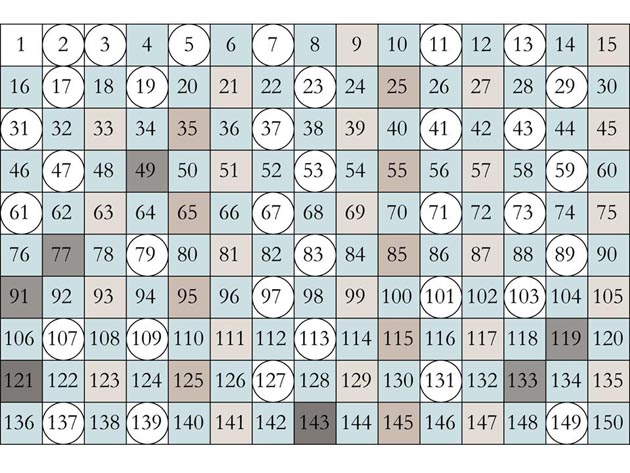
In antiquity, Eratosthenes (276–194 BCE) showed how to determine the prime numbers below a given number by eliminating all the non-primes (see Tangente 149). For example, to list all the prime numbers below 150, we begin by writing down every number from 2 to 150. We retain 2, which is prime, and cross out its multiples. This requires no calculation: we simply move through the table two places at a time. We then repeat the process with the first number not crossed out, namely 3, and continue in the same way. This produces the table below.