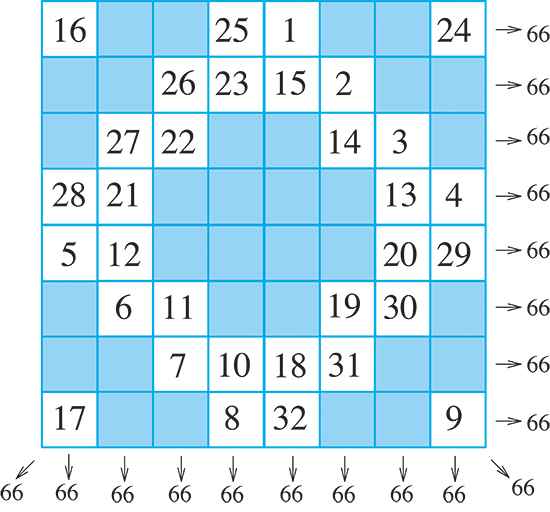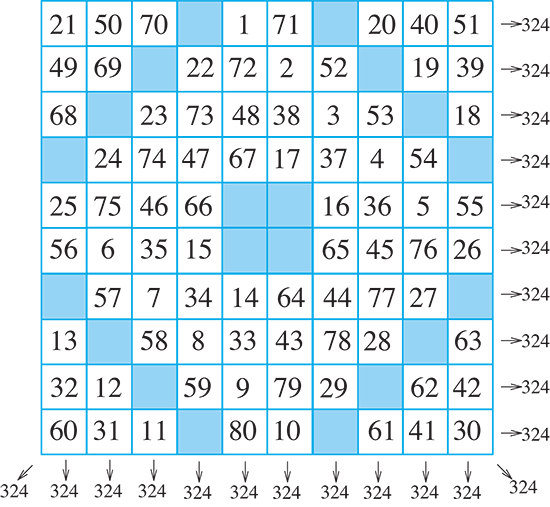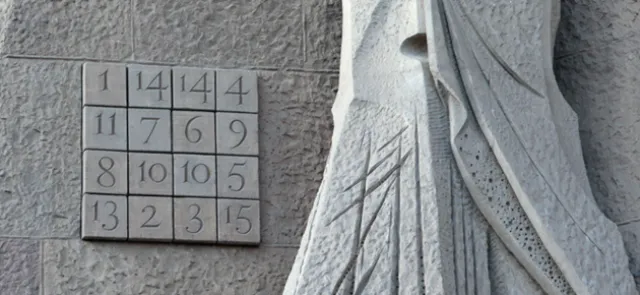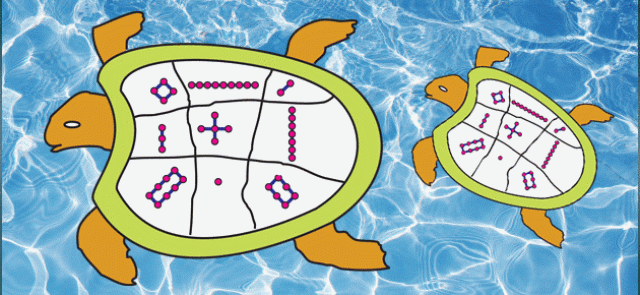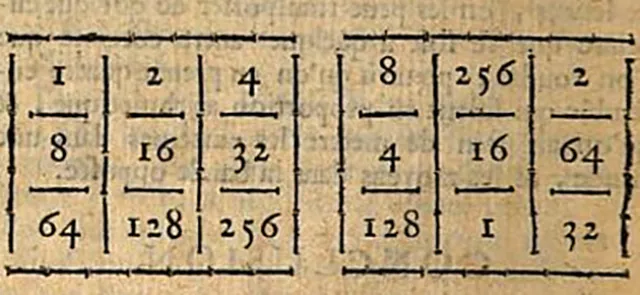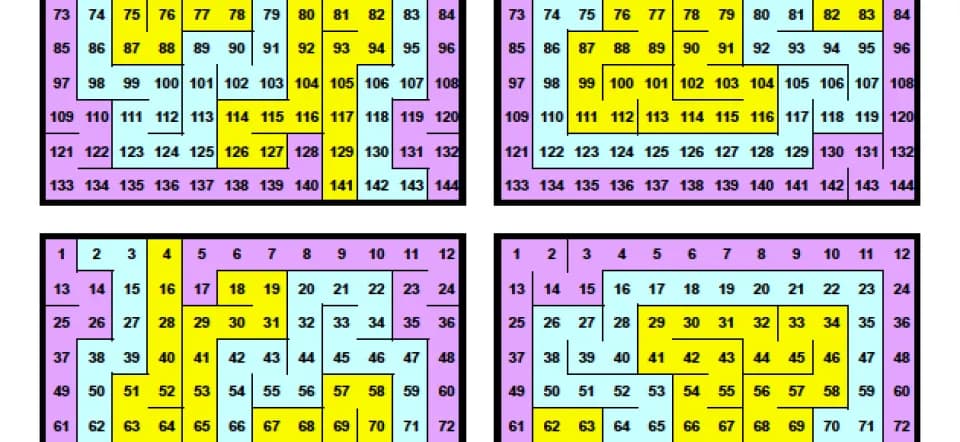

Magic squares have inspired wonder since antiquity. Mathematicians, artists and enthusiasts of every stripe have racked their brains to find forms of magic within a square beyond the "ordinary" classical arithmetic variety.


Articles recommended for you.

can numbers be arranged so perfectly that they produce equal sums in every direction? The challenge is certainly difficult, but construction methods do exist! The magic of arithmetic...

Puzzles have been part of human culture since earliest antiquity. At first, inventing puzzles was bound up with mythology or religion; gradually, it became a purely intellectual game, independent of any purpose or practical application.

Albert Ayme left his engineering post in 1960 to devote himself to painting and sculpture. His scientific training led him to devise a combinatorial system of variations on the square, combining visual pleasure with mathematical rigor. He made the square magical!

The world of magic squares is still very much alive and remains an active field of research. Access to computing power has rekindled enthusiasts’ interest in these arithmetical objects. What happens if we try to define a multiplicative form of magic?
Discussion
Sign in to post a comment and talk with other readers.
No comments yet. Be the first to respond.