Why are they called "magic squares"
One of the Muslim world's most original scientific contributions is undoubtedly the development of general methods for constructing magic squares, as Jacques Sesiano shows in les Carrés magiques dans les pays islamiques (PPUR, 2004). Two 10th-century texts—the earliest known on the subject—first present specific construction methods based on trial and error, followed by several general methods that favor reasoning over trial and error.
Texts from the 11th century show that people already knew how to fill squares of every order, sometimes even subject to additional constraints. These early methods were refined over the following centuries. Meanwhile, a growing number of texts explained the magical uses of particular squares, some of which were sent under specific conditions to bring good luck or cast spells. These texts eventually reached Europe via Spain in the late Middle Ages. The Arabic name for the "magic square" also meant "harmonious arrangement of numbers."
Nested squares
-------------------
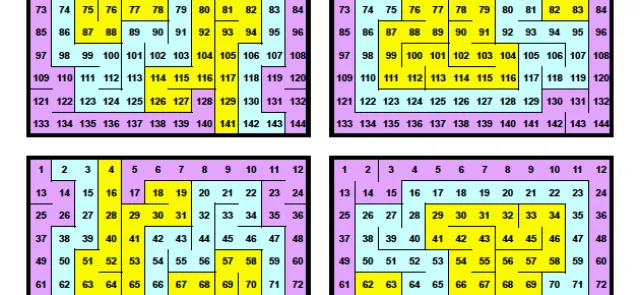
One variant of the magic square studied by artists, craftspeople and lovers of elegant mathematics is the bordered square, or nested square. Such squares consist of concentric magic squares constructed around a given magic square. Take a look at the remarkable example below.