
At the start of the 2024 school year, 154,000 seventh-grade pupils and 137,000 ninth-grade pupils, many of them from schools that had volunteered to take part, sat a series of computer-based standardized tests in French and mathematics. The mathematics test assessed fluency through a multiple-choice questionnaire containing around thirty questions spanning every area covered. The results were published in early July in a working paper from the French Ministry of National Education (available online). By the end of ninth grade, 46.6% of pupils had satisfactory proficiency in language skills, while 16.8% could not read 120 words in one minute (the expected standard by the end of fifth grade is 120 words per minute). The picture was similar in mathematics, with 45.7% of pupils demonstrating satisfactory fluency. Gender differences, already noticeable in seventh grade, emerged: girls performed better in French and boys in mathematics. The differences associated with social background were even more pronounced.
A mathematics exam in the penultimate year of high school
--------------------------------------------
Since mid-June, it has been confirmed that high school students will sit a mathematics exam at the end of their penultimate year, beginning in June 2026 for the 2027 baccalauréat session. This latest in a long line of changes to Blanquer's 2019 baccalauréat reform, announced by Gabriel Attal in December 2023, was poorly received by the Conseil supérieur de l’éducation, although that body has only an advisory role. The decision was prompted in particular by the disappointing results of the PISA study (which assesses 15-year-old students) and forms part of a plan presented by the minister, Élisabeth Borne, to "rekindle students' enthusiasm for mathematics."
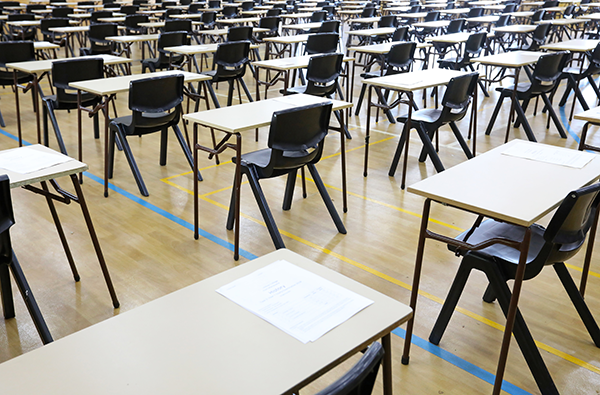
The two-hour exam will consist of two parts: 14 points for two or three conventional exercises covering the entire curriculum for the penultimate year, and 6 points for a twelve-question multiple-choice test of mathematical fluency. No calculators will be allowed—a significant departure from current practice. This small detail will undoubtedly unsettle many students at the start of the school year, but let's hope they all overcome their apprehension!

Will it carry weight on Parcoursup?
-----------------------------
Three different papers will be offered for the new mathematics exam at the end of the penultimate year, depending on the student's pathway: the technological track, the general track with specialist mathematics (four hours per week), or the general track without it (one and a half hours per week).
The exam will have a weighting of 2 (the written and oral French exams each have a weighting of 5). The total weighting, excluding optional subjects, will remain 100: the Grand oral exam will be reduced from 10 to 8 in the general track and from 14 to 12 in the technological track. By its very nature, this flagship feature of the 2019 high school reform—which requires an almost exclusively oral presentation, notably without using the board or any form of written aid, as well as a genuine gift for making complex ideas accessible—continues to prompt debate across several scientific disciplines, including mathematics.
This very modest weighting for the exam at the end of the penultimate year may nevertheless matter differently on the Parcoursup platform. Higher education institutions will undoubtedly be interested in this result, which may appear more objective than continuous assessment, a fortiori with its 6 points from multiple-choice questions. Students who continue with specialist mathematics will still sit an exam at the end of their final year, with a weighting of 16. Unless anything changes, they should then have their calculators back.
Will this exam do more to foster students' enthusiasm for mathematics than, for example, giving everyone more mathematics lessons in middle school? We will know in a few months.