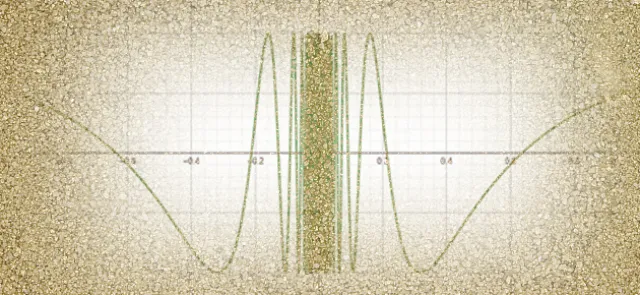
"Counterexample." The term sometimes raises a smile, recalling some outlandish function presented to students as a warning against misusing a theorem. Because it does not address the general case, it is often seen as unworthy of interest and relegated to the realm of mathematical recreation. Without denying its entertainment value, the counterexample is nonetheless of fundamental importance in mathematics.
Fatal to conjectures
---------------------
A counterexample is not the exception that proves the rule of common sense. A theorem holds in every case in which its assumptions are satisfied. The negation of a statement—that is, the assertion that it is false—is proved by the existence of a case in which the assumptions hold but the conclusion does not. In the language of logic, negating the proposition "for every x, the proposition P(x) is true" is exactly the same as asserting that "there exists an x such that P(x) is false." This particular x is the counterexample.