



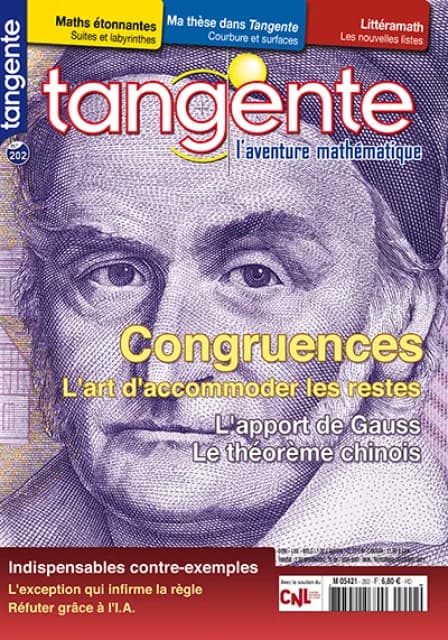
Congruences
This issue is not fully translated into English yet; only translated content is shown.
Read the French versionAll folders in this issue
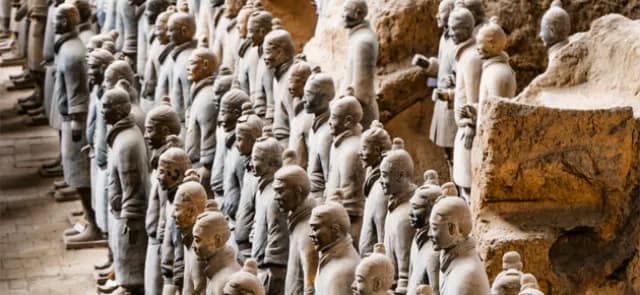
Congruences
The idea of grouping integers according to the remainder of their division by a given number is as old as arithmetic. From the "Chinese remainder theorem", inherited from ancient China and studied up to the 13th century, to that of Fermat, the field would see many advances, until the arrival of Gauss, who would formalize the notion of "congruence" and sign the birth certificate of modular arithmetic. This new and powerful vision of numbers, which allows encompassing the infinity of integers in a finite model, also applies to concrete domains: the proof by nine, calendar cycles, security codes... It is also found in music and produces some nice curiosities, such as certain magic tricks.


Indispensable counterexamples
Just as a small drawing is worth more than a long speech, in the realm of mathematics, nothing beats a counterexample to refute a false intuition or an erroneous conjecture. While it is fascinating (or sometimes amusing) for enthusiasts, the search for counterexamples is not a mere distraction. It is fundamental, both in the reasoning process and as a pedagogical tool. It has punctuated the development of mathematics, allowing for example the theory of functions to take shape. More recently, programs using artificial intelligence have highlighted sophisticated counterexamples, refuting numerous conjectures, particularly in graph theory.
All articles in this issue

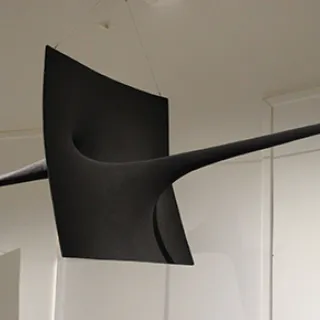
Constant mean curvature surfaces
The study of surfaces still holds plenty of surprises! Anyone who enjoys making bubbles with soapy water will be familiar with minimal surfaces. Constant mean curvature surfaces, such as catenoids and unduloids, are less well known.

Littéramath, the website
A project highlighting the links between mathematics and literature

Are the French averse to assessment?
An attempt to analyze young French people's poor performance in international assessments.

The Parisian origins of Nicolas Bourbaki
A plaque honoring the Bourbaki group at the site of its first meeting in a Paris café.
Elegant methods for solving problems (3)
The final installment in our three-part series on methods for solving problems with a minimum of technical machinery. The aim is to discover an imaginative, original approach that shifts the puzzle into familiar territory.
Turing machine contest
A young Tangente reader has won the Turing machine offered as a prize by thaM thaM.