



Famous figures
Portraits of famous mathematicians, historical and contemporary

Tangente Awards 2022: take part | Tangente
As usual, the Club Tangente is delighted to invite you to take part in several awards. Whether or not you read Tangente, there is bound to be a category that sparks your interest.

A tribute to Gérard Cohen-Zardi | Tangente
Sad news. A few days after André Antibi, another friend of Tangente has passed away. Gérard Cohen-Zardi, who taught mathematics at the Université de Jussieu, was passionate about popularizing mathematics and exploring its links with other disciplines.

A delightful conjecture by Paul Erdős…
The convergence of certain series is a classic topic in analysis (see Suites et Séries, Bibliothèque Tangente 41, 2011). For example, it is fairly easy to prove that the harmonic series—the sum of the reciprocals of the positive integers—diverges.
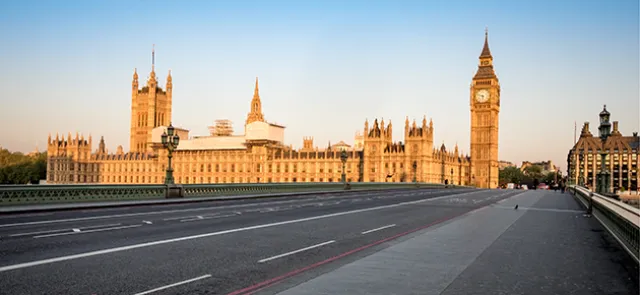
Bertrand Russell: A century of passionate living | Tangente
Bertrand Russell was no ordinary mathematician. His Nobel Prize in Literature attests to the breadth of his talents. His advocacy of sexual freedom and his campaigning for peace gave this exceptional man his full stature.

Alfred Whitehead, Russell's collaborator | Tangente
Russell's fame has overshadowed Whitehead's immense contribution to the development of logicist theories. The two men wrote the Principia Mathematica together.
From intuition to rigor
In Euclid’s geometry, a line already divided the plane into two distinct regions, but negative lengths were not accepted. How can the algebraic notions of direction and measurement be brought into geometry?

Bertrand Russell: a man of letters and numbers | Tangente
At 78, too old for a Fields Medal, and with no prize specifically devoted to philosophy, the mathematician and philosopher Bertrand Russell was awarded the 1950 Nobel Prize in Literature, much to his surprise.

The Möbius strip in art | Tangente
The legendary Möbius strip—a two-dimensional, non-orientable surface with only one side, easily made from a strip of paper—has inspired several artists.

Hilbert's thirteenth problem
At the second Congress of Mathematicians, held in Paris in the summer of 1900, David Hilbert presented a list of research questions that he considered important. The list contains twenty-three problems spanning every field: algebra, geometry and analysis.

The building blocks of Galois theory
Although inspired by Galois's work, "his" theory developed long after his death and did not take off until algebraic structures were introduced.
Beyond Lagrange's memoir
As a teenager, Galois read Legendre and Lagrange, followed by Gauss and Cauchy. He often cites the latter two, but rarely Lagrange. Galois was clearly influenced by Lagrange's ideas; he would, however, go much further, benefiting from all the advances made since 1771.

The school system in Galois's time | Tangente
In Évariste Galois's day, the school system was still somewhat different from ours. For example, students could choose to skip certain grades depending on their intended course of study.

Galois's last letter reconstructed | Tangente
In 2011, to celebrate the bicentenary of Évariste Galois's birth, a special issue of Tangente Sup (issue 60) was published with an ambitious guiding principle: to describe Galois theory not in today's terms, but using the knowledge available at the time!

René Taton’s historical studies of Galois | Tangente
René Taton (1915–2004) was a historian of science. A graduate of the École normale supérieure and holder of the agrégation in mathematics, he was best known for his research on Gaspard Monge (1746–1818) and Girard Desargues (1591–1661). He also took a keen interest in Galois, amassing a substantial body of documentation.

Galois: Dupuy's official biography | Tangente
The earliest comprehensive biography of Évariste Galois—and the one researchers recognize as "official"—was written by Paul Dupuy (1856–1948), a former student of the École normale supérieure who had passed the agrégation examination in history.

Évariste Galois: Previously unpublished accounts | Tangente
Do you know what Sophie Germain thought of Évariste Galois? What became of his loyal friend Auguste Chevalier? And who was Galois's opponent in his duel?
Galois: from historical figure to legend | Tangente
The merging of two images, one scientific and the other political, gave rise to the image of Évariste Galois as an ill-fated mathematician—the image we have of him today. Galois did not become "famous" until the very last years of the 19th century.

Galois: unpublished archives and treasure hunters | Tangente
Alongside university and academic research, enthusiasts conduct genuine investigations into Galois's life
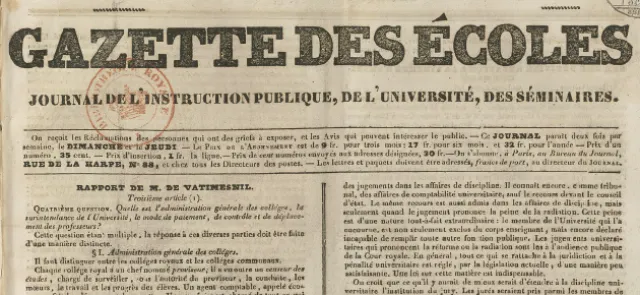
Galois: Republican mathematician and activist | Tangente
Évariste Galois threw himself wholeheartedly into the political struggles of his time. His activism, republican convictions and bold acts would cost him more than ten months of his short life in prison.
Two geniuses, two approaches
Two methods are known for proving that the general quintic equation cannot be solved: Abel's method, presented in 1824 and refined in 1826, and Galois's method from 1829–1830. Galois theory is fairly well known, whereas Abel's ideas are less often discussed.