



Famous figures
Portraits of famous mathematicians, historical and contemporary
Gold, yes... but metal too
Mathematics enthusiasts—and mathematicians themselves—have no shortage of imagination! Starting from the golden ratio, some have defined a family of numbers known as metallic means that share certain properties with the golden ratio.

When mathematics meets comics | Tangente
Mathematics may not be the first thing that springs to mind for comic-book enthusiasts. Yet the two fields are far from as separate as one might think; when they come together, the results can be real gems.

An example of a group in the social sciences
A simple, classic, real-world application of the mathematical concept of a group can be found in social anthropology. It was brought to light by the anthropologist and ethnologist Claude Lévi-Strauss, working with the mathematician André Weil.
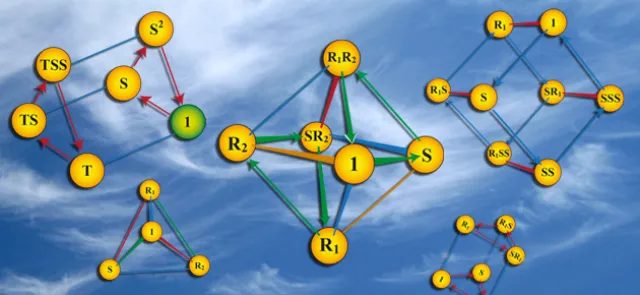
The Cayley diagram
How can we grasp the structure of a finite group at a glance? The Cayley diagram provides the answer!
Lie groups
The groups introduced by mathematician Sophus Lie have become indispensable tools in theoretical physics.

The Klein group and its many guises
When we first start working with groups, we patiently draw up the tables for those with only a few elements. A one-element group consists solely of the identity element and is therefore unique. Similarly, groups with two or three elements are unambiguously determined. The surprises begin with four elements...
The Monster: the largest sporadic group | Tangente
The Monster is a group with more elements than there are atoms on Earth. Let’s meet it...
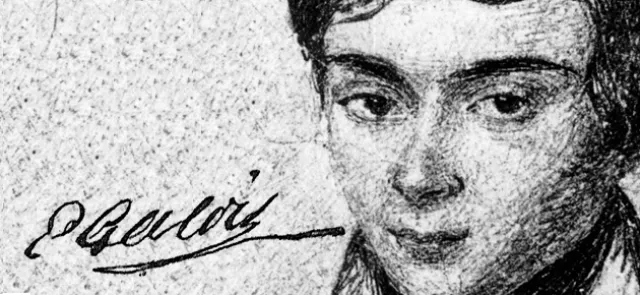
Galois's brilliant contribution
Following his work on solving fourth-degree equations, Lagrange turned to the fifth-degree case. It was not until Abel that these equations were shown not to be solvable by radicals. Galois would provide a necessary and sufficient condition for an equation of any degree to be so solvable. In doing so, he founded group theory.
Turing machine contest: the 14-year-old winner | Tangente
A young Tangente reader has won the Turing machine offered as a prize by thaM thaM.
Schwarz's theorem
From Euler to Cauchy, via Clairaut, no one doubted that reversing the order of partial differentiation left the result unchanged. Hermann Schwarz overturned this belief with a superb counterexample.
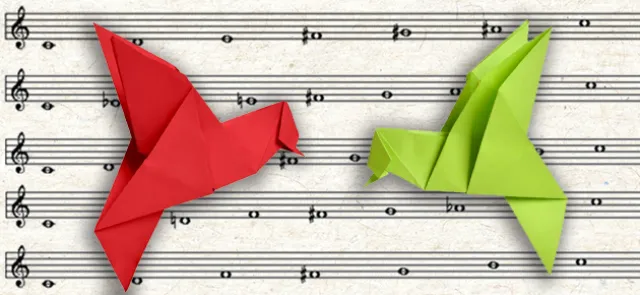
Olivier Messiaen: music and congruences
Mathematics and music were intertwined for centuries before gradually going their separate ways. Yet many composers remain attached to the language of numbers. Olivier Messiaen is a notable example: congruences play a part in the construction of his modes.
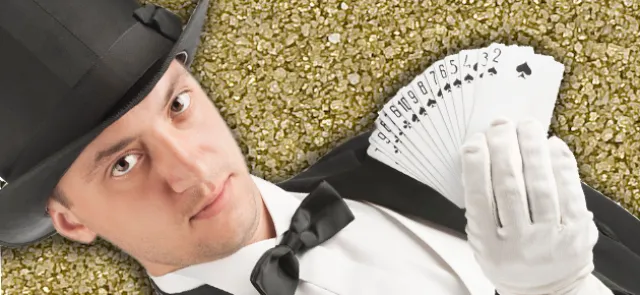
Number magic and self-working tricks | Tangente
Nowhere are congruences more vivid, striking or spectacular than in self-working magic tricks. Though "swept under the rug," they are there, guaranteeing the performer success. The audience can only marvel at the effect... and suspect that the magic of numbers is at work.
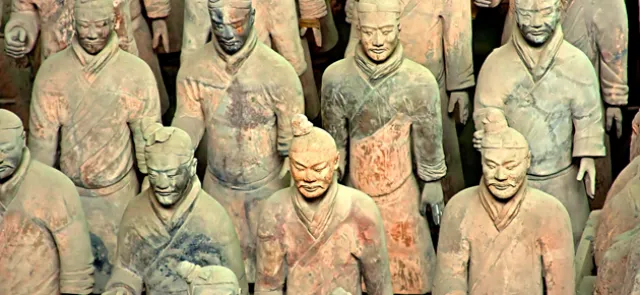
The Chinese remainder theorem
The periodic nature of planetary revolutions naturally gives rise to the notion of congruence. The earliest surviving written problem on this theme is known as the Chinese remainder theorem. Its universality has led to many fundamental applications in the theory of numbers and polynomials.

An incongruous little tour through the world of congruences
Cooks have long known that making the most of leftovers is an art. The same is true in mathematics, where congruence is a remarkably rich concept. This notion has applications ranging from everyday life to highly theoretical settings.

Divisibility without calculations
We cannot forget them: they are ingrained in our memories from elementary and high school—but is that really certain? Do we still remember all those divisibility tests our mathematics teachers drummed into us so often?
The Parisian origins of the Nicolas Bourbaki group | Tangente
A plaque honoring the Bourbaki group at the site of its first meeting in a Paris café.

Littéramath: the mathematical literature site | Tangente
A project highlighting the links between mathematics and literature
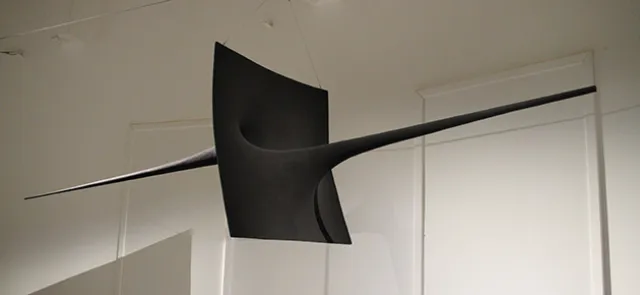
From intuition to rigor:
From Cauchy to Weierstrass, rigor steadily took hold in analysis throughout the 19th century. A variety of counterexamples swept away mistaken beliefs and forced mathematicians to define the relevant concepts more precisely. Some "monstrous" functions were introduced, fascinating to some and repellent to others.
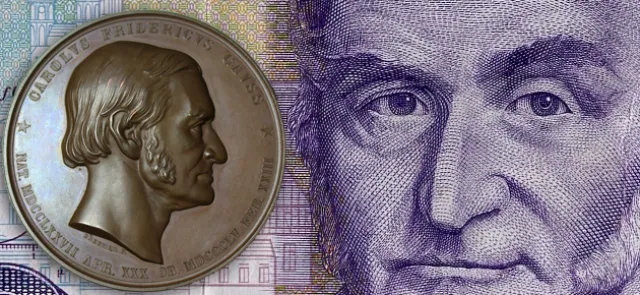
A history of modular arithmetic
The idea of working with the remainders obtained when numbers are divided by certain integers, rather than with the numbers themselves, gradually gained ground. Gauss formalized the idea with his notion of congruence, giving rise to modern modular arithmetic. Congruences have quite a history!
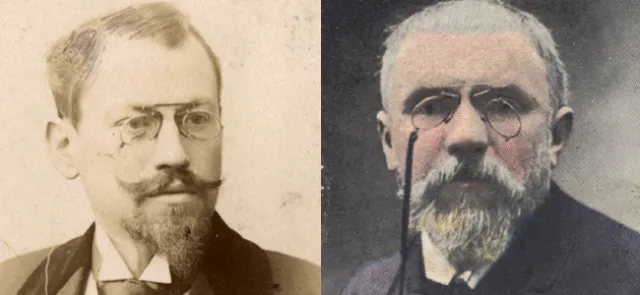
Poincaré: psychology of mathematical invention | Tangente
Henri Poincaré wrote extensively about his experience as a mathematician and the role of intuition in mathematics. Less well known is that he also agreed to take part in a clinical study conducted by the psychiatrist Dr Toulouse. Even so, the origins of mathematical creativity remain mysterious.