



Discovering differential equations
Don't be afraid of them! Behind an often confusing formalism, differential equations are an extremely powerful area of mathematical analysis. They have become indispensable due to the need to solve concrete problems in many fields where they play a fundamental role. First used in geometry and physics, they now enable, in most sciences and many engineering fields, the modeling of phenomena involving a continuous variable. And when it is impossible to find an exact solution, one can determine an approximate solution with the help of numerical schemes or computers.
All articles in this folder

My first differential equation | Tangente
Do differential equations frighten you? Admittedly, there is good reason to be wary. Yet they become very approachable once a few constraints are imposed; linearity is one of them. And when the factors involved are constants, they are within everyone's reach—especially when the right-hand side is zero.

A relationship between functions and derivatives
Historically, differential equations emerged early in the development of analysis, through problems in geometry and mechanics.
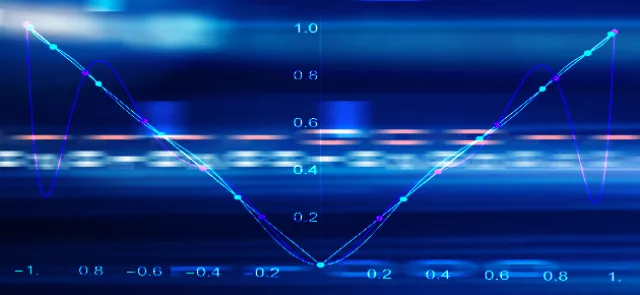
When numerical methods provide the solution
Except when a differential equation is linear or of a very special type, there is generally no exact method for solving it—that is, for finding a solution. We therefore often have to resort to approximation methods and numerical schemes.

Models for biology
Historically, differential equations emerged in response to geometrical questions and problems in physics, particularly the study of planetary motion, pendulums and, later, heat diffusion. Yet they have plenty of applications in biology too!

An epidemic of ODEs
In epidemiology, mathematical modeling has three aims: to understand, describe, and predict. Since the focus is on what happens in the "fairly distant" future, continuous-time models involving differential or partial differential equations are generally preferred.