



Errors and Approximations
Even in mathematics, kingdom of rigor, one cannot escape the necessity of making approximations or roundings, of bounding deviations or potential errors. The handling of floating-point numbers, which bridges the world of ideas and that of technology, is a fine example. The goal of exactitude pushes one to quantify the uncertainty imposed by technical or material constraints. Inseparable from scientific computing, including with computer tools, approximation can have far-reaching consequences. Yet some errors are famous for having, inadvertently, allowed a door to be opened toward a new universe.
All articles in this folder
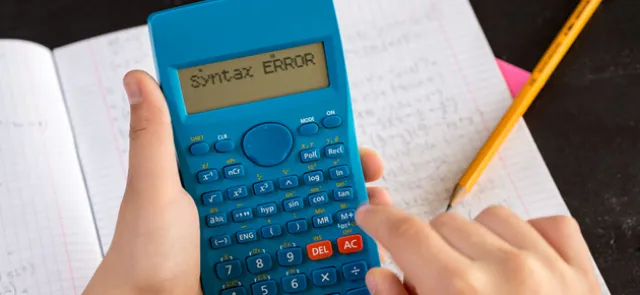
When errors propagate...
Error is inseparable from scientific computation. Calculations of this kind inevitably involve errors. However, it is essential to know where they may come from, to keep them under control, and to estimate their order of magnitude so as to determine whether a result is reliable.

How to test without making mistakes
Statistical tests are invaluable for assessing a hypothesis about a population from observations of a random sample. But they are also the source of many errors. Let's learn how to avoid them—in both methodology and the interpretation of results!

Numbers in computers | Tangente
Many kinds of software, from scientific computing to video games, need numbers to perform their tasks. These numbers may be integers or real numbers. Despite the enormous power of computers, approximations are inevitable; as they accumulate, they can be harmful and sometimes even catastrophic.

When an error bears fruit
Many mathematicians have made mistakes, whether through inadvertence, a miscalculation, a flaw in a proof, or a temporarily mistaken belief.