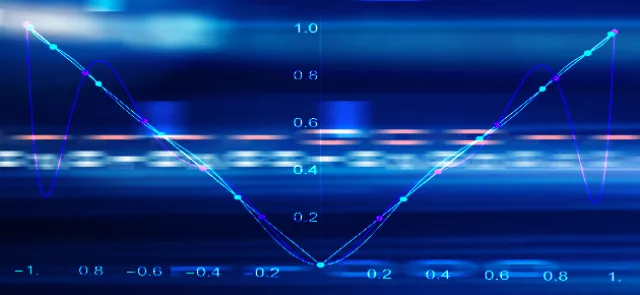
In practice, numerical errors encountered in a study can have a variety of sources:
• Errors in the data: often arising from measurements, the data are not known exactly, and this may affect the calculations;
• Errors due to the computational method: an approximate method, rather than an exact one, is often used, introducing a systematic error;
• Errors arising from the calculations themselves: calculations are performed on a computer using floating-point arithmetic, and rounding errors are particularly troublesome. It is probably worthwhile to minimize the number of operations.
These various errors add together (and sometimes cancel each other out, if we are lucky...); there may therefore be choices to make so as to keep the overall error as small as possible. Depending on their source, different means will be needed to control—or even minimize—the errors.