



Games and Probabilities
In games with incomplete information, game strategies are not certain, as they depend on information that the players do not have. Probabilities then play a strong role in how to play, the objective being to move toward the situation that maximizes the probability of gain, or even its expected value. But this probability is not always easy to calculate, especially since in certain contexts, such as casino games, the rules change to prevent players from mastering it.
All articles in this folder
GTO: game theory applied to poker | Tangente
Game theory is not reserved for games "with complete information." It also applies to games where chance plays a part. In poker, it has today given rise to tools, available to online players, that let them play optimally in the first round of betting.
Mathador: the mental arithmetic game | Tangente
Mathador (Réseau Canopé, L2D), inspired by the famous television game shows "Des chiffres et des lettres" and "Le compte est bon", was created in 1999.
Board games and chance: the maths of dice | Tangente
What role does chance play in a board game? It can vary widely, ranging from total dominance, where players have no say at all, to complete absence. Between the two extremes, the strategies of many games rely on optimizing probabilistic principles.
Bridge: Suit Combinations and Probability | Tangente
Bridge (and its ancestor, whist) is, along with chess, one of the two most celebrated games in the West, as the quotation below from Edgar Allan Poe attests — no doubt too flattering. Probability is often invoked in deciding which strategy to adopt.
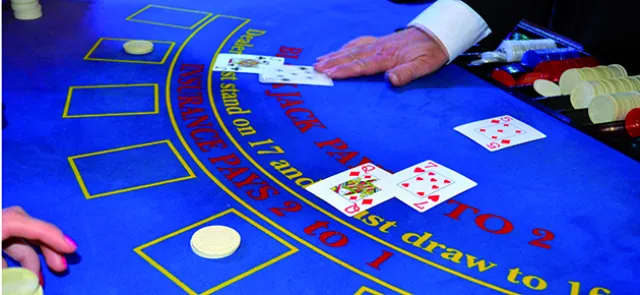
Blackjack: fluctuating probabilities | Tangente
Mathematicians have been studying blackjack since the postwar years. They discovered ways to improve players’ performance by applying probabilities both statically (basic strategy) and dynamically (card counting). But casinos changed the rules to protect themselves.