



Maths and contemporary music
Since Pythagoras, we have known the close links between music and mathematics. In the 20th century, the greatest names such as Boulez, Xenakis or Schaeffer, vied with inventiveness, drawing on probabilities, symmetries and even chaos theory, to create new compositions. Since the advent of synthesizers, the game has been revolutionized and engineers collaborate on musical creations in organizations such as Ircam. Some draw inspiration from rhythms based on simple numerical ratios to revisit popular music such as Argentine tango.
All articles in this folder
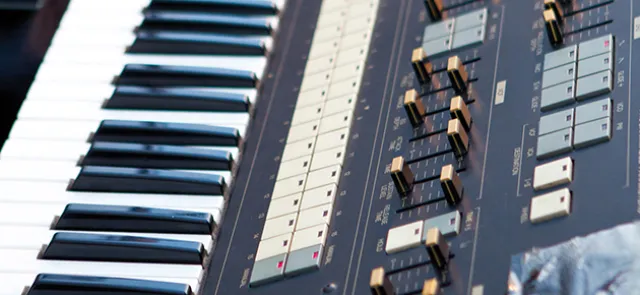
A century of mathematical music | Tangente
Since 1945, contemporary "art" music has become so diverse that any overview is now impossible. Yet technology and the introduction of some form of chance or randomness into composition remain ubiquitous.
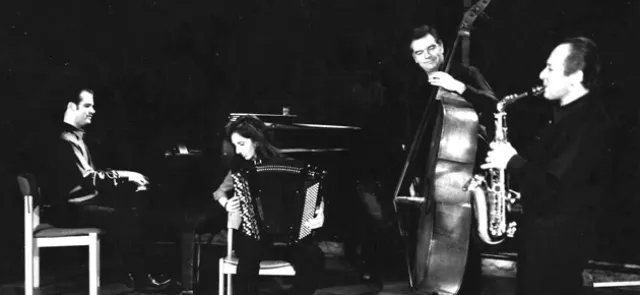
Astor Piazzolla and tango nuevo:
The freedom championed by the rise of contemporary music led Astor Piazzolla to break free from the stifling conventions of classical tango, both harmonically and rhythmically, and create a new form. This evolution in musical structure can be analyzed.
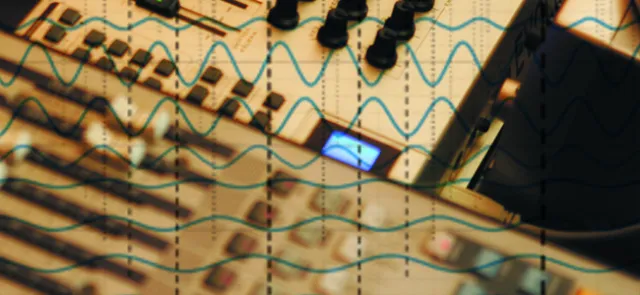
Acoustics and computer music: Helmholtz | Tangente
Thanks to the work of Joseph Sauveur and later Hermann von Helmholtz on sound phenomena, we can analyze a sound in terms of its pitch, intensity and timbre. This is the analysis used in computer music, which is so popular with contemporary composers.

Atonal music: a rearguard debate | Tangente
In 2013, Karol Beffa, a composer and improvising pianist who held a chair at the Collège de France, organized a lecture. Drawing on examples, he set out to demonstrate the continued existence of the tonal—or neo-tonal—system and the failings of an atonal system that he considered dogmatic, inaccessible to the ear and obsolete.

When mathematics enters musical composition | Tangente
The deep connections between mathematics and music in the process of composition grew richer during the twentieth century.

Oumupo: The workshop of potential music | Tangente
In 1960, François Le Lionnais and Raymond Queneau founded a collective dedicated to renewing literary forms: Oulipo (the Workshop of Potential Literature). From the outset, Le Lionnais considered extending this approach to other forms of expression.
France at the forefront of music research | Tangente
It took many a political battle, but today France can pride itself on having world-class centers dedicated to music research.