



Old-fashioned fractions
When discussing fractions, we often begin by evoking the idea of fair sharing. Yet, even when sticking to their common definition, this approach does not do justice to the richness and variety of uses one can make of them, ranging from the definition of our musical notes to the handling of gears. For its part, Thales' theorem makes geometry equally fond of fractions. The so-called Egyptian fractions, that is to say those with numerator 1, seem to have been the first to have been considered. Their name alone indicates that their age is counted in millennia, and we may explain this by the fact that in a sense a third, a quarter, a fifth, and more generally an nth are the prime fractions, from which all others are derived by simple multiplication by an integer.
All articles in this folder
Fractions and music: when 3/4 is not equivalent to 6/8
Octaves, fifths, triplets… The rhythms and pitches of Western music were built on fractions.
The case of the camels
Seventeen camels: an inheritance that seems impossible to divide? This slightly paradoxical Eastern puzzle has a mathematical answer.
Gears
How can a ratio be approximated by a simpler one? Crucial to clockmakers and engineers, this problem can be solved with a healthy dose of arithmetic and algorithms dating back to antiquity.
The Egyptian way
Although the general concept of a fraction was absent from the mathematics of early antiquity, Egyptian scribes made extensive use of what we call unit fractions, or reciprocals of integers. Further developed by Fibonacci, this so-called "elementary" mathematics remains an active subject of research in number theory.

Old-time fraction puzzles to solve | Tangente
Thirds, quarters and other fractions have long provided the basis for puzzles in a wide range of settings. Here are three from centuries past.
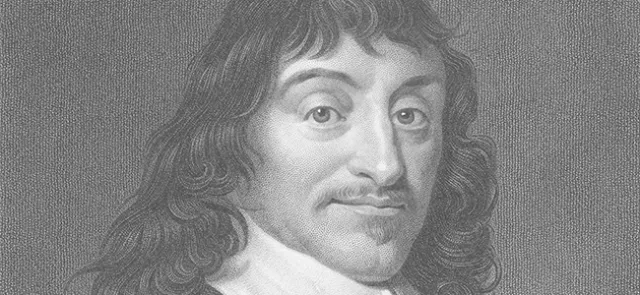
Descartes' way
How can fractions be handled geometrically? At the beginning of his most famous work, Descartes shows us how.