



Various metrics
Since the end of the 19th century, mathematics has embraced the abstract notion of distance by integrating new ways of calculating it in the plane or space: the 'Manhattan' distance, travel time distance... One can then wonder what the corresponding 'circle' looks like. Drawing skills are sometimes necessary to trace the surprising shapes that answer the question. The axiomatization of the concept of metric space also makes it possible to extrapolate distance to combinatorics, analysis, and even algebra. The objects considered are no longer necessarily points in the classical sense. One can then, for example, define a distance between two functions.
All articles in this folder
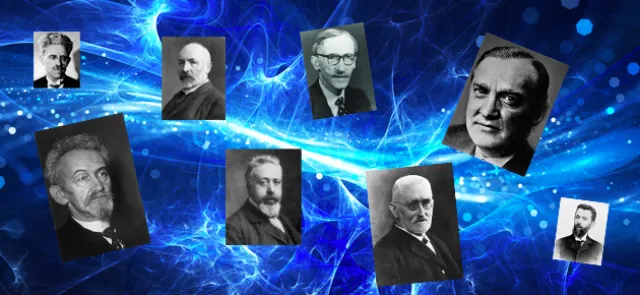
The genesis of metric spaces
In the early 20th century, Maurice Fréchet and Felix Hausdorff felt they were discovering a new world: set theory provided the framework in which they introduced the concept of distance, a generalization of absolute value on the real numbers.

So far, so near…
What is the distance between Paris and Rome? Faced with this question, one may legitimately wonder whether this means "as the crow flies," "by train," "by car," or "in the Euclidean sense." Ultrametric distances even reveal a world in which every triangle is isosceles.
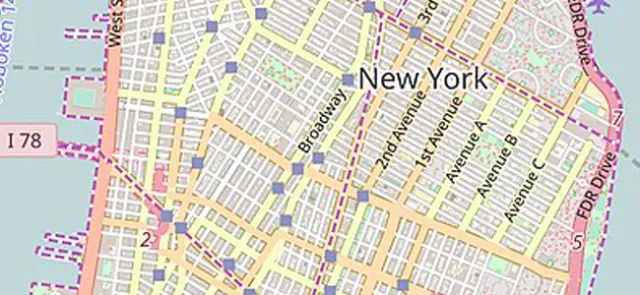
Surprising distances: Manhattan and Chebyshev | Tangente
The Euclidean distance in the plane is the one everyone knows: it tells us that the shortest path between two points is a straight line. But there are many others, often rather unusual. Some are downright surprising…
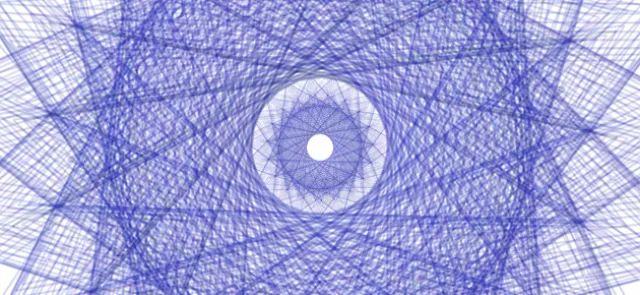
Balls in the plane
A spherical ball is the set of points whose distance from a center is less than a constant. Mathematicians, always seeking to generalize, accept this definition of a ball… in any space equipped with any kind of "distance."
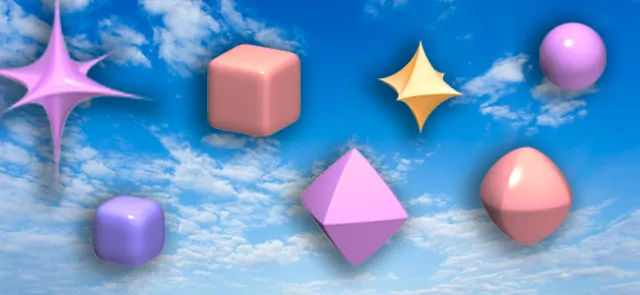
Surprising shapes in space
As in the plane, many balls associated with different norms can be defined in space. They include polyhedra, some regular and others more surprising. You can thus make a delightful festive collection of baubles to match your next Christmas tree!

Norms on function spaces
The notion of distance can also be applied to functions