At the very beginning of the 20th century, the need arose to introduce the notion of "distance" and the concept of a "metric space." This formed part of a broader, spectacular shift towards abstraction in mathematical structures, a shift that had taken place over the previous half-century.
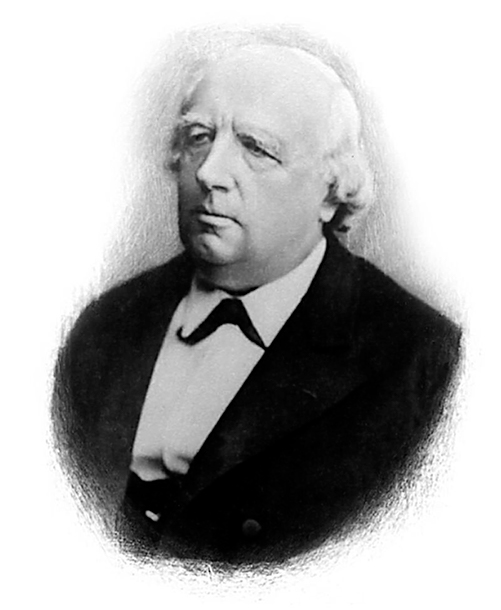
Karl Theodor Wilhelm Weierstrass (1815–1897).
In the 1860s, largely through the work of Karl Weierstrass, the notions of continuity and limit were established and precisely defined using the absolute values of differences tending to 0.
In the 1870s, set theory developed through the work of the Germans Georg Cantor and Richard Dedekind and the formalization undertaken by the Italian mathematician Giuseppe Peano. Shortly afterwards, his compatriots Vito Volterra and Salvatore Pincherle turned their attention to spaces whose elements were functions rather than points. In doing so, they founded what is known as functional analysis, a name proposed by the French mathematician Paul Lévy.