



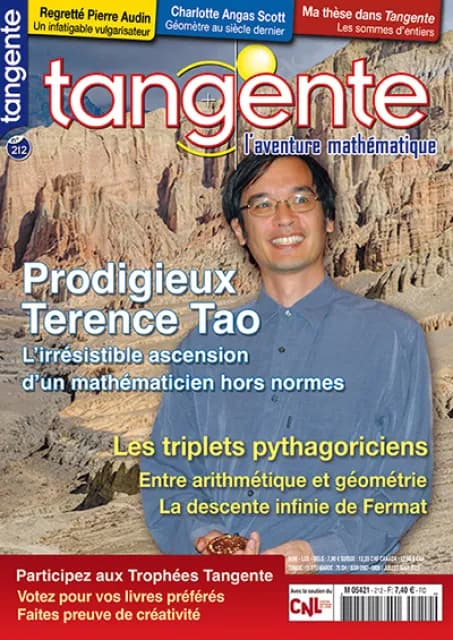
Prodigious Terence Tao
This issue is not fully translated into English yet; only translated content is shown.
Read the French versionAll folders in this issue
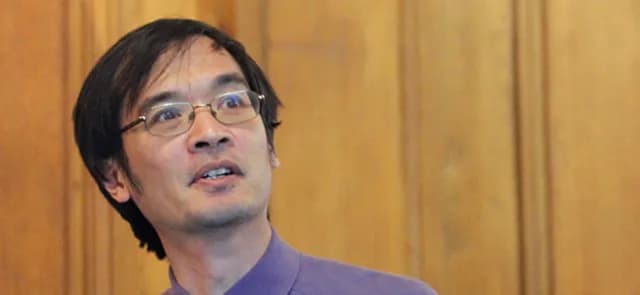
Prodigious Terence Tao
Terence Tao is the most famous prodigy in mathematics of our time. In this dossier, you will learn a lot of information about him, his studies, his work, the results he has obtained, the awards that have been bestowed upon him... His activity belies the idea that mathematics has become so vast that a mathematician can no longer, on his own, encompass its entire breadth. To his mathematical successes is added a formidable willingness to share. His blog, of inexhaustible richness, bears witness to this, where "Terry" dispenses a thousand pieces of advice, from specialized subjects where his answers help advance research, to more general ones, such as how to approach managing a career as a mathematician. His commitment to collaborative projects goes in this direction, through his involvement in "open science" or the energy he puts into the service of Polymath projects. Let us set out to discover this outstanding mathematician...


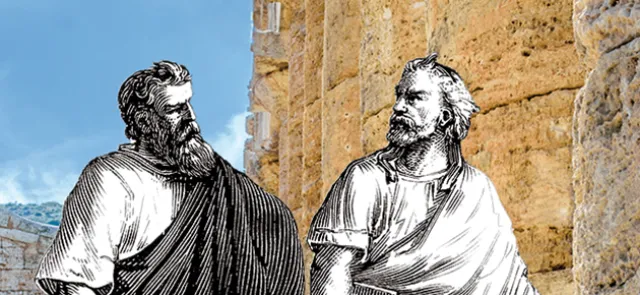
Pythagorean triples
Which of our readers does not know the triple (3, 4, 5), embodied by the 'rope with thirteen knots' of the builders of ancient Egypt and then the Middle Ages? Why 3, 4, 5? Because 3² + 4² = 5², it's as simple as the Pythagorean theorem! This relationship links the lengths of the three sides of the most elementary right triangle there is. Beyond these three numbers that have become mythical, exploring Pythagorean triples will not only make it possible to know that the Pythagorean theorem was already known long before the birth of the most famous scholar of Antiquity, but also to uncover the secrets of these groups of three integers, through the procedures that will make it possible to construct them. This will also lead to studying the different properties of all varieties of 'Pythagorean triangles'. But do you know that Fermat, to show that 'the area of a right triangle cannot be a square', deduced his method of 'infinite descent'? The journey through this theme holds beautiful surprises!

All articles in this issue

Pierre Audin has passed away
Pierre was rigorous, dependable, compassionate, attentive, determined and funny… and he seemed tireless. He slept very little, sending a great many emails at night—often at 3:14 a.m.

The 2023 Abel Prize
The 2023 Abel Prize was awarded to Luis Caffarelli

Maryna Viazovska on the CultureMATH website
The CultureMath website, produced by the École normale supérieure, features an interview well worth reading. Mathematics teacher Nathalie Braun interviews Maryna Viazovska.

Get creative and take part in the Tangente Awards
Every summer, Club Tangente presents its awards. Alongside its literary prizes—the Tangente Book Prize and the Tangente High School Students' Prize—which recognize books devoted to mathematical culture, two competitions invite our readers to get creative. Don't hesitate to enter!

The legacy of Annette and André Parent
Annette Parent passed away on April 26, 2023. Her death was a source of immense sadness for everyone who knew her; Annette had a generosity and warmth that no one could forget.

International Mathematical Games Championship: the 2023 French final
After two years without an international final because of the pandemic, the 36th Championship held its final outside France for the first time, in Lausanne, Switzerland, while the final round of the 37th Championship will take place on August 25 and 26, 2023, at Wroclaw University of Science and Technology in Poland

Some questions about sums of integers…
You might think that everything has already been said and done about adding two integers. Think again! That mischievous carry, which can ripple from one step of the calculation to the next, gives rise to difficult questions. This elementary algorithm still raises formidable problems.
Charlotte Angas Scott,
A pioneer of algebraic geometry and a specialist in curves and surfaces, British mathematician Charlotte Angas Scott was forced to move to the United States to find an academic post. Her chief claim to fame is an elegant proof she devised for a difficult theorem by Max Noether.