You approach along the street named after architect Jacques-Germain Soufflot (1713–1780). The church he envisioned rises majestically atop a small hill, the Montagne Sainte-Geneviève. Even before you enter, mathematics is already beckoning: look at David d'Angers's triangular pediment, dating from 1837. At the center, the Nation, assisted by Liberty and the winged figure of History, rewards its great figures. On the right stand military men in their varied uniforms, with Bonaparte in republican dress. On the left is civil society, with Voltaire and Rousseau seated alongside mathematicians—Gaspard Monge in the front row and Pierre-Simon, Marquis de Laplace, in the second. If you have sharp eyes—or a telephoto lens—you may even spot students grappling with geometry exercises in the acute angles of this isosceles triangle.
!img0
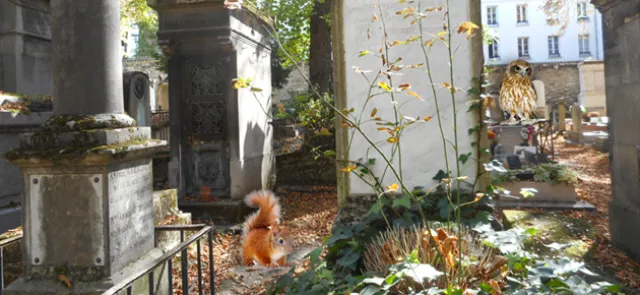
Descartes still awaiting transfer
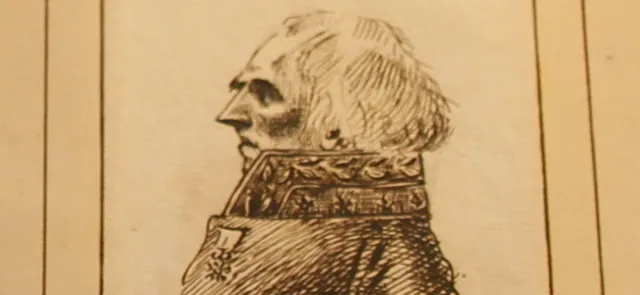
!img1Gaspard Monge and Pierre-Simon de Laplace.
It is time to go inside. The majestic nave and the tiling on the floor and dome might invite mathematical observations, but they are not what makes this place unique. Let's head for the crypt, passing by the frescoes, colonnades and sculptures—though we should spare a glance for the Encyclopedists, who were by no means indifferent to mathematics—and even Foucault's pendulum, which recreates the 1851 experiment.