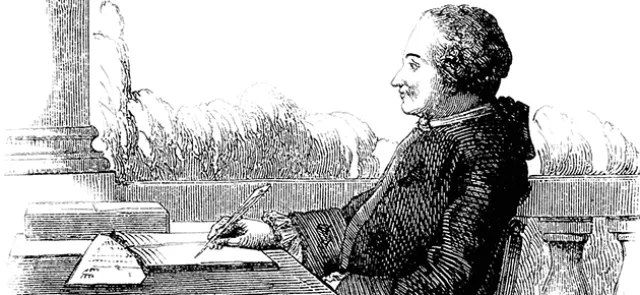
Undeniably, the Laplace who was able—or knew how—to play a certain political role is unloved by historians. One need only read Alfred Fierro-Domenech's portrayal of the scientist in the Dictionnaire Napoléon (edited by Jean Tulard, Fayard, 1987) to see this: "Driven by careerism that combined abject servility toward the powerful with extreme arrogance toward his subordinates, Laplace chose politics as his path to advancement. His convictions were as fickle as the political upheavals of the time." This account could be rebutted point by point with compelling examples from Laplace's life.
Science: mere vainglory?
--------------------------
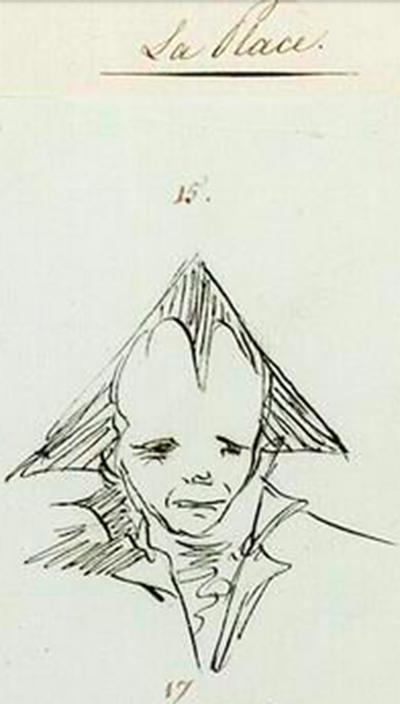
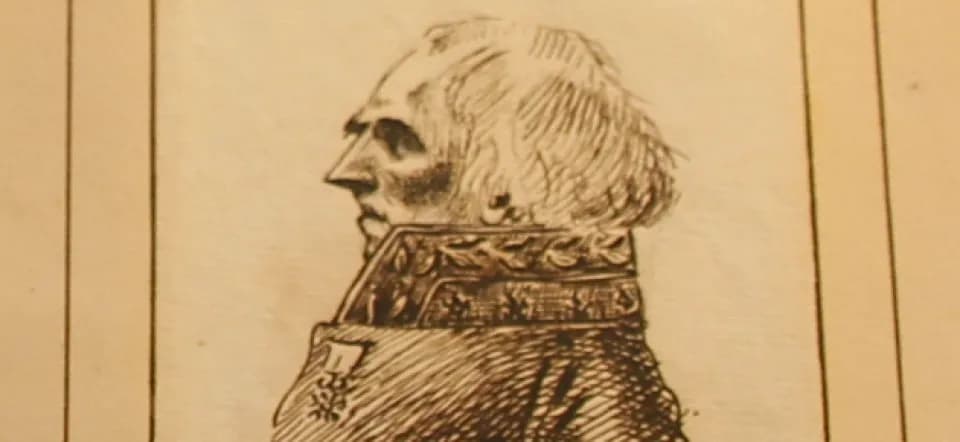
But this ill-founded opinion conceals something else. Because Laplace served as Minister of the Interior under the Consulate after the coup of 18 Brumaire, Year VIII, the author of this entry feels entitled to suggest that the scientist—who had published the Exposition du système du monde in 1796, followed in 1799 by the first volumes of the Traité de mécanique céleste—had previously "achieved" nothing! Remarkable science counts for nothing. For his part, the editor of that same Dictionnaire spoke of "spinelessness" when describing Boilly's painting of 1804, which depicts the studio of the sculptor Houdon. Houdon is preparing a bust of Laplace, who had become Chancellor of the Senate a year earlier and is sitting for him. The same outlook appears in an entirely different form in François Furet and Mona Ozouf's Dictionnaire de la Révolution française (Flammarion, 1988). Quite simply, the two authors omit Laplace's name altogether! Despite the efforts of the Third Republic and the values of universalism, this reflects a French difficulty in finding a place for science—and mathematics in particular—within a shared cultural imagination that conveys national significance rather than mere vainglory. Added to this is the Romantic notion that a creative intellectual squanders his gifts by becoming involved in political life. Even during his lifetime, under the Restoration, when he had become a marquis and sat in the Chamber of Peers, Laplace was caricatured as a zombie with an enormous head enclosed in a triangle. When Fourier, as permanent secretary of the Académie des sciences, delivered a eulogy for Laplace after his death, he avoided discussing Laplace the politician, precisely because of the very institution in which he was honoring Laplace as a scientist.
####