Pierre-Simon Laplace
This issue is not fully translated into English yet; only translated content is shown.
Read the French versionAll folders in this issue


Political commitment
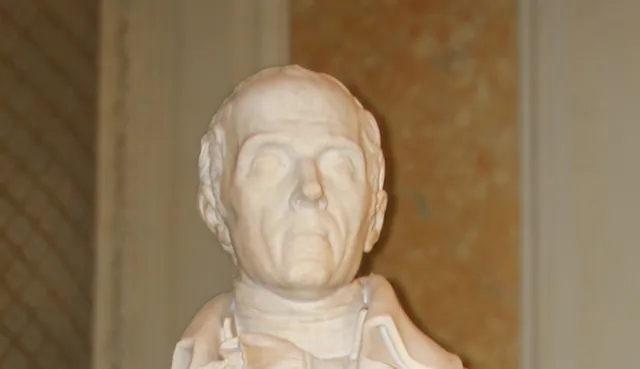
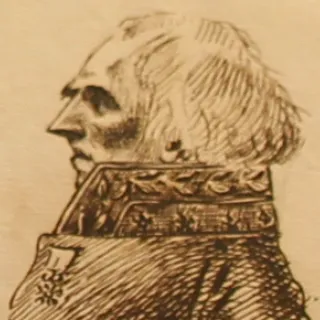
Laplace is the perfect example for refuting the idea according to which scientists, inaccessible and walled up in their ivory tower, are comfortably isolated from the world around them. Although he stayed away from revolutionary turmoil, he nevertheless became involved in politics. As senator and chancellor, he signs, for example, the deposition of Napoleon. Beyond this, his position at the Academy of Sciences and his commitment allow him to be at the heart of the development of the Grandes Écoles in France. This aspect of his life still remains little studied by historians.
Work in celestial mechanics
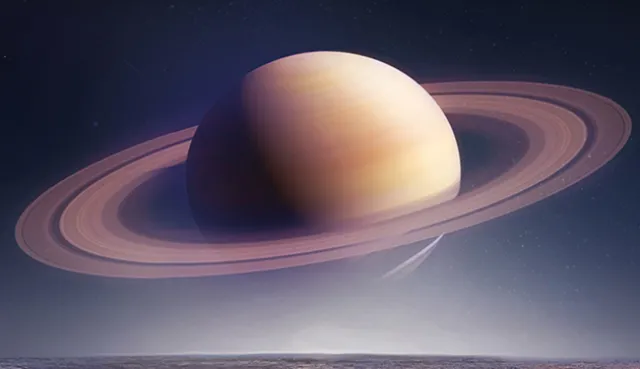
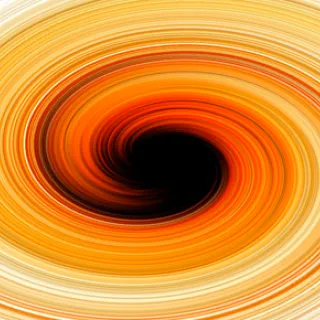
Newton's law of gravitation is the foundation of work in celestial mechanics. It nevertheless sometimes seems to malfunction. Thus, Jupiter and Saturn do not seem to behave as expected; the tidal flow is greater than what the theory predicts. Through extensive work, Laplace discovers little-known phenomena: the so-called Coriolis forces, tidal dynamics, gravitational resonances... The Norman polymath had even predicted the existence of black holes!
A new approach to probabilities
Although convinced of the deterministic functioning of the Universe, Laplace notably contributed to the development of probability calculus, bringing it into the field of mathematics. One would be tempted to see a paradox there. The scholar is actually interested in practical problems. Typically, how to choose the 'most relevant' value among several measurements? From his research, he builds a theory that leads to the normal distribution.