It is the end of the 18th century. For five years, the Revolution has been shaking the country. Following the execution of Robespierre, Couthon, Saint-Just and nineteen of their supporters on 9 Thermidor, Year II (27 July 1794), the Jacobins, who advocate popular sovereignty and the indivisibility of the French Republic, are dispersed and neutralized. The popular movement and the sans-culottes, now deprived of their leaders, are greatly weakened.
The few popular uprisings that follow, particularly in Germinal and Prairial, Year III (1st April 1795 for the uprising of 12 Germinal, and 20 May for that of 1st Prairial), fail to put the Revolution back on course to meet the expectations of the common people. Instead, the royalist reaction rears its head with the uprising of 13 Vendémiaire (5 October 1795). Although the Convention's troops rout the insurgents, the White Terror takes hold in the provinces and the Chouan insurgency flares up again in the Vendée. The Girondins, who chiefly represent the wealthy commercial bourgeoisie, return to the forefront of the revolutionary process… The Thermidorians now hold sway and seek to close off any prospect of further revolution with the bourgeois, republican Constitution of Year III.
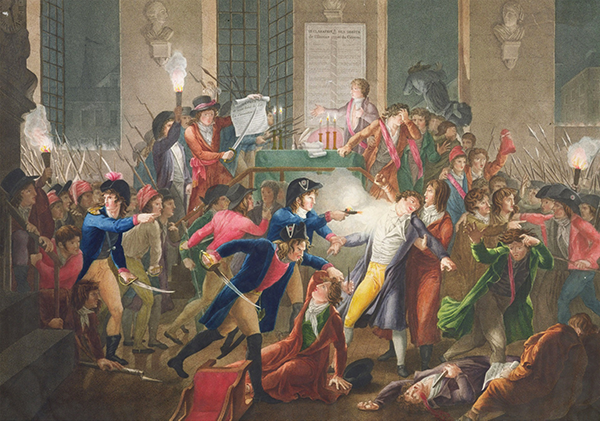
La Nuit du 9 au 10 thermidor an II (The Night of 9–10 Thermidor, Year II), by Jean-Joseph-François Tassaert (c. 1796), depicts the arrest of Maximilien de Robespierre (1758–1794).
A family of republicans
---------------------------