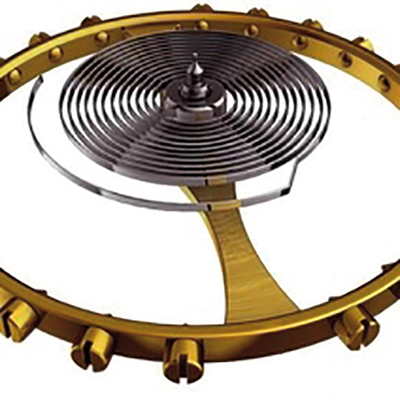
The Archimedean hairspring at the heart of watchmaking
Archimedes' time
Once again, we turn to a "spiral"—not in a field or on a canvas, but… inside a watch.


Once again, we turn to a "spiral"—not in a field or on a canvas, but… inside a watch.


Articles recommended for you.

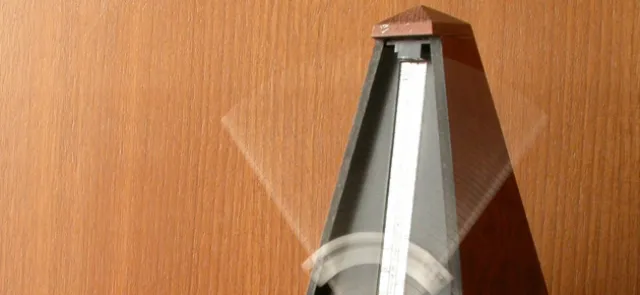
Marking time, giving music its rhythm by keeping the beat: these are the functions of an object that accompanies many musicians—the metronome. Originally mechanical, it later became electronic, no doubt to keep in tune and move with the times…

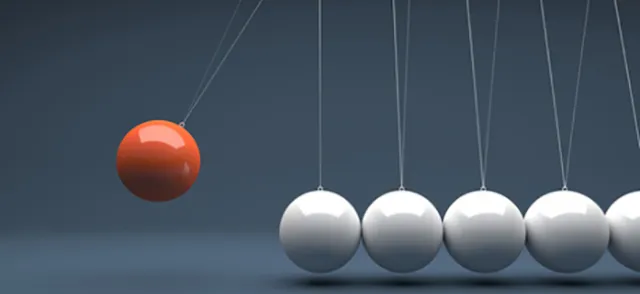
The cycloidal pendulum has three key properties: it is isochronous, tautochronous and brachistochronous. Behind these learned names lie fundamental properties—so fundamental, in fact, that we owe nothing less than the birth of clockmaking to the pendulum!

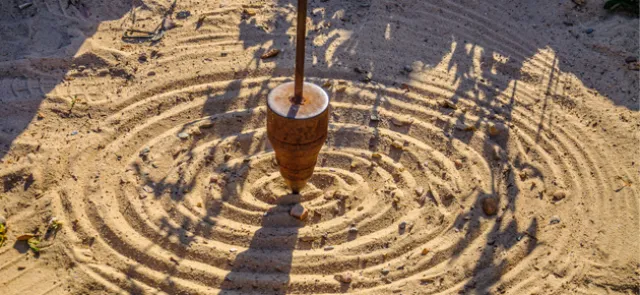
In 1970, American land-art pioneer Robert Smithson used bulldozers to create an enormous spiral of volcanic rock northeast of the Great Salt Lake, in Utah, in the western United States

Huygens's invention of the first pendulum clocks in 1650 helped shape modern differential geometry—with unexpected repercussions for a very recent problem in quantum mathematical physics.
Discussion
Sign in to post a comment and talk with other readers.
No comments yet. Be the first to respond.