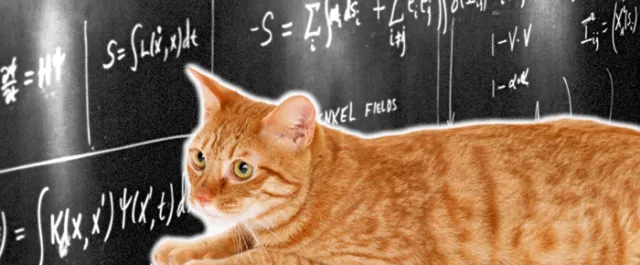
In 2004, British mathematician Ian Stewart published in Nature an article entitled "Quantizing the Classical Cat." In it, he considered in turn the motion of a cat trying to land on its feet and the carbon dioxide molecule, the familiar CO2. What connects these two images? The answer lies hidden in the fascinating history of the science of motion—and brings two major scientific revolutions face to face.
O Time, suspend your flight
================================================================================================================================================================
One scientific revolution is rarely discussed, yet without it modern life would be unimaginable: the precise measurement of passing time. In antiquity, the masters of geometry and algebra had little interest in measuring time more accurately than a sundial or water clock allowed. These rudimentary instruments saw no significant improvement before the 17th century! How could we live today with the hazy relationship with time of earlier ages? We would never be "on time" for school—and we could bid farewell to our modern devices, which cannot work without their microprocessor clocks.