Carmichael numbers are composite numbers—that is, they are not prime. They are defined with reference to Fermat's little theorem, which concerns prime numbers. So let us recall the statement of the theorem attributed to the Toulouse lawyer and mathematician.
Fermat's little theorem
-----------------------
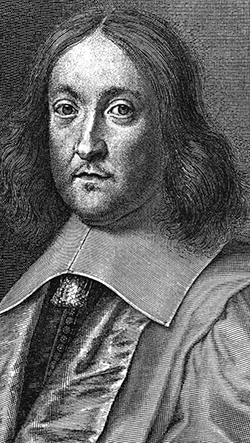
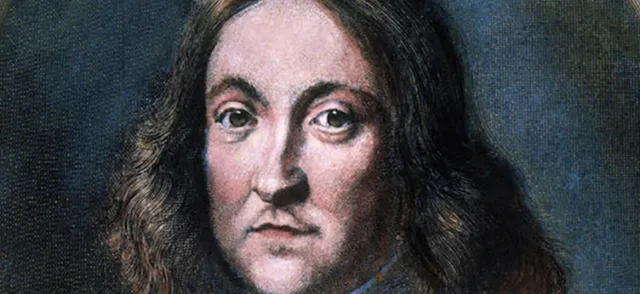
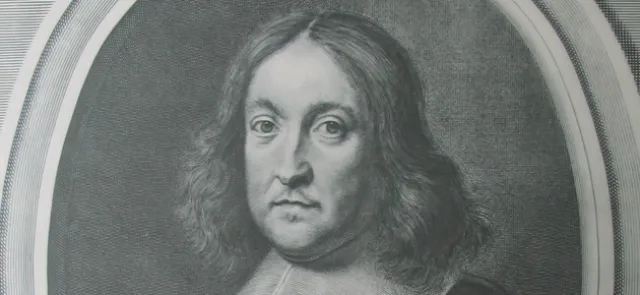
Pierre de Fermat (c. 1601–1665).
If p is a prime number and a is a natural number, then *a p / a (mod p); that is, p divides the integer a p − a. Equivalently, if a is coprime to p, then p divides a p*−1 − 1. For example, since 6 is coprime to 13, we can state without calculation that 13 divides 612 − 1 (which is in fact equal to 2,176,782,335, or 13×167,444,795). Such is the magic of Fermat's little theorem!