It is often difficult to pin down the contributions made by the various people involved in developing a concept. As Farkas Bolyai said when urging his son János to write up his ideas on non-Euclidean geometry as quickly as possible:
> "When the time is ripe for certain things, they appear in different places, much like violets blossoming in early spring."
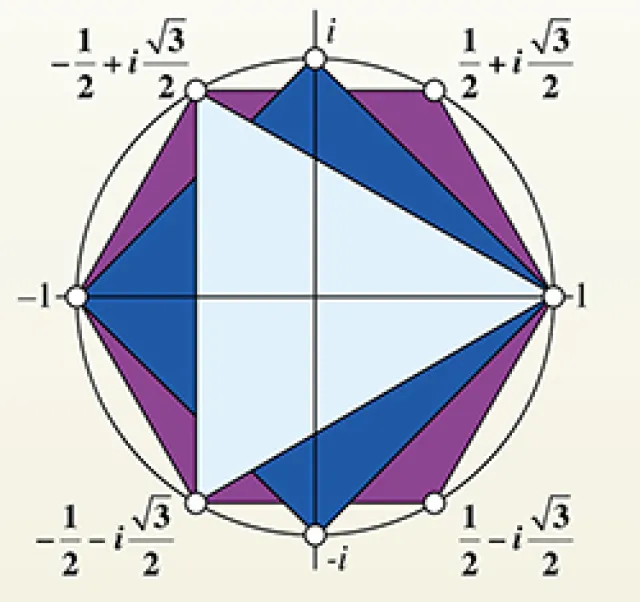
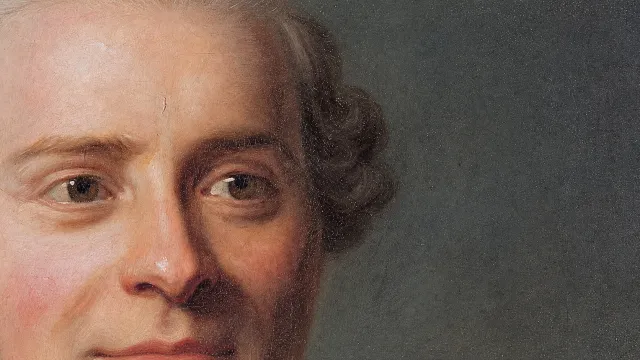
The concept of complex numbers is no exception. The Dane Caspar Wessel (1745–1818) was the first to propose a geometric interpretation of imaginary numbers, in his 1799 treatise Essai sur la représentation analytique de la direction. Yet Jean-Robert Argand's 1806 "Essai" may be regarded as the foundational text on the geometric representation of complex numbers, thanks to its mathematical insight and its proofs illustrated with geometric figures.
-
Primitive roots
---------------