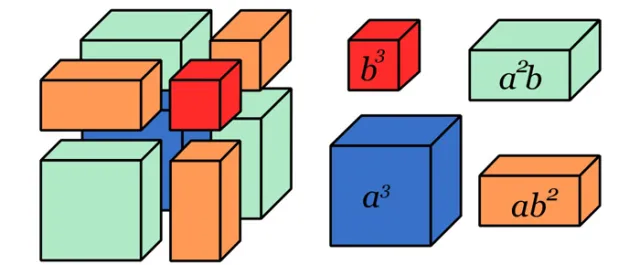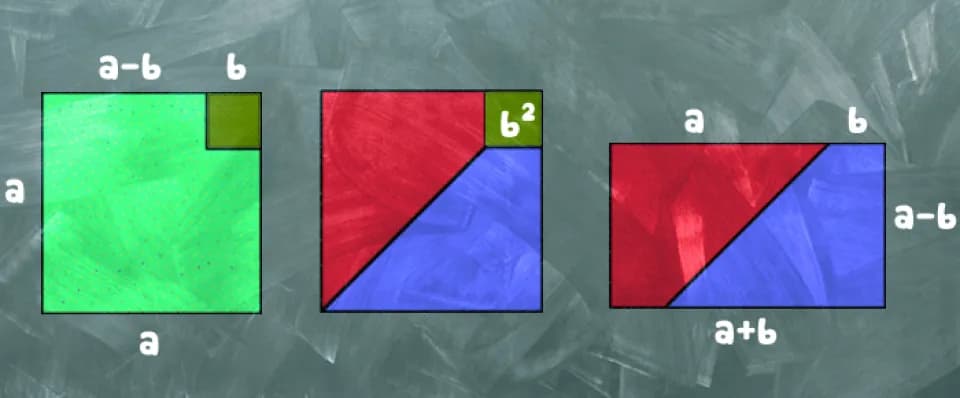
These familiar "algebraic identities" have long been one of the mainstays of algebraic manipulation in the French mathematics-teaching tradition. They have formed—though not always explicitly—part of the knowledge passed on, taught and used for as long as mathematical schools have existed. Yet although they enjoyed a golden age in middle-school algebra curricula, they appear only sporadically in the 2016 ninth-grade curriculum…
A long history…
-------------------
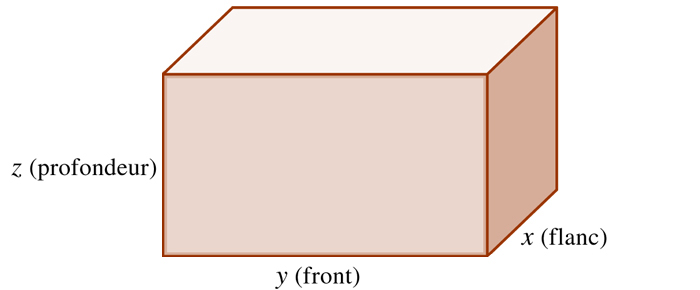
Around two thousand years before the Common Era, the Babylonians of the Old Babylonian period were already recording problems and their solutions on tablets used to train scribes, those "bearers of knowledge"; algebraic identities featured prominently in them. One example asked for two numbers given their sum and product, in the context of a surprisingly concrete problem: "A cellar. The flank and the front [the reciprocals of each other], the depth, the sum of the flank and the front. I excavated 26 units of earth. What are the flank, the front and the depth?" Today we would say: find x (the flank), y (the front) and z (the depth) of a cellar, given that xy = 1, x + y = z and xyz = 26.