A mere fancy that proved very useful
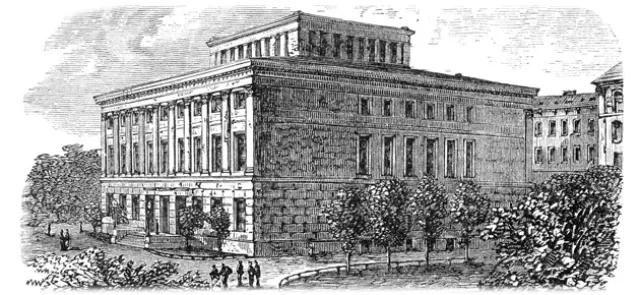
Kurt Hensel was born in Königsberg, now Kaliningrad, in 1861. He studied mathematics in Berlin and then Bonn, attending lectures by such eminent scientists as Karl Weierstrass, Rudolf Lipschitz, Gustav Kirchhoff, Hermann von Helmholtz, Karl Borchardt and Leopold Kronecker. Under the supervision of Kronecker, a leading specialist in number theory, he earned his doctorate in 1884. He first taught at the University of Berlin, then joined the Philipps-Universität in Marburg in 1901, where he ended his career in 1930. He died in this Hessian city eleven years later.
Deeply involved in promoting mathematics, he served from 1903 to 1936 as editor-in-chief of the Journal für die reine und angewandte Mathematik, better known as Crelle's Journal after its founder.
His doctoral adviser had a profound influence on him, and Hensel would later publish Kronecker's complete works. He conceived the construction of the p-adic numbers at the intersection of Kronecker's work and Weierstrass's research on power series.
Kurt Hensel paved the way for the notion of valued fields. Initially regarded as a mere fancy, the p-adic numbers would prove useful thanks to Helmut Hasse's work on quadratic forms.