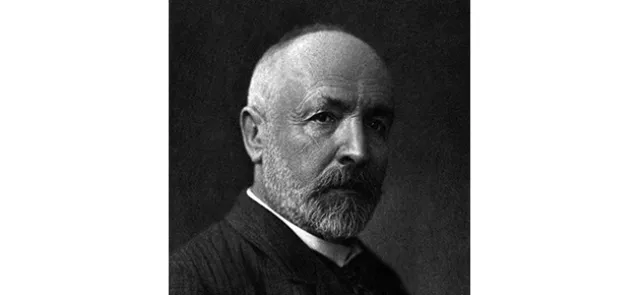
The German mathematician Georg Cantor was born in Russia to Danish parents. From 1856 he lived in Frankfurt. His father, a Protestant of Jewish origin, and his mother, a Catholic, instilled in him a passion for medieval theology, probably the source of his intricate arguments about continuity and infinity. He studied in Zurich, then in Germany, in Berlin, where he attended the lectures of Weierstrass, the father of modern analysis, and of Kummer and Kronecker, both eminent specialists in number theory. He rounded out his education with studies in physics and philosophy.
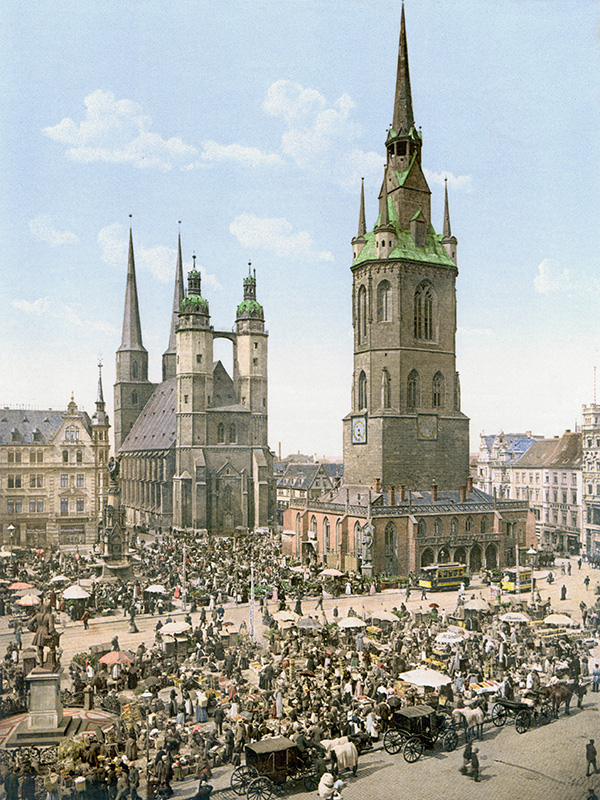
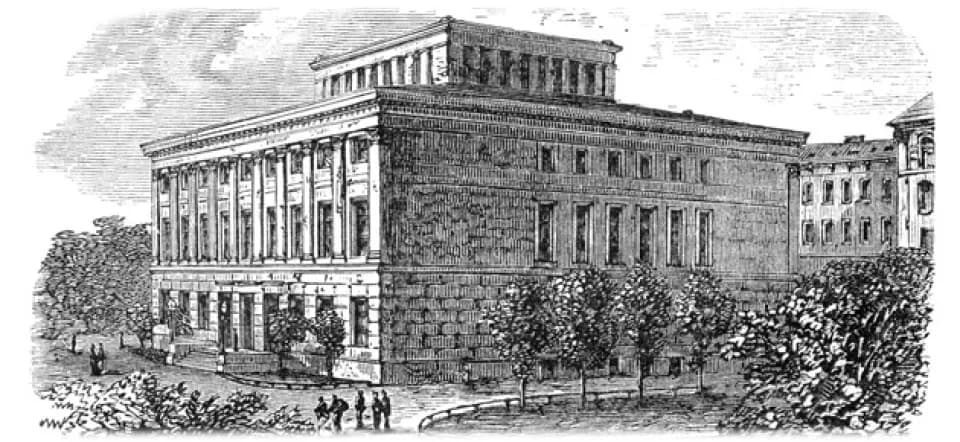
After a semester at the University of Göttingen, he defended his doctoral thesis in 1867, likely one of the last mathematical texts ever written in Latin: In re mathematica ars propendi pluris facienda est quam solvendi ("In mathematics, the art of calculating is more important than that of solving"). In 1869 he obtained a professorship at the University of Halle, which he did not leave until 1905, when he stopped teaching altogether.
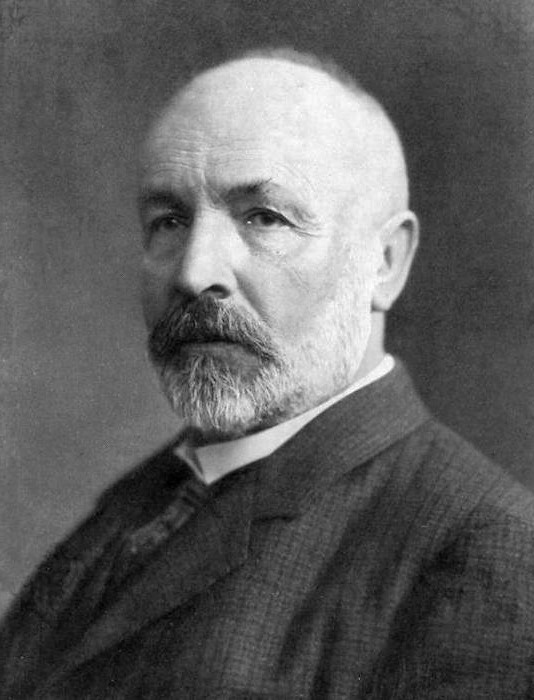
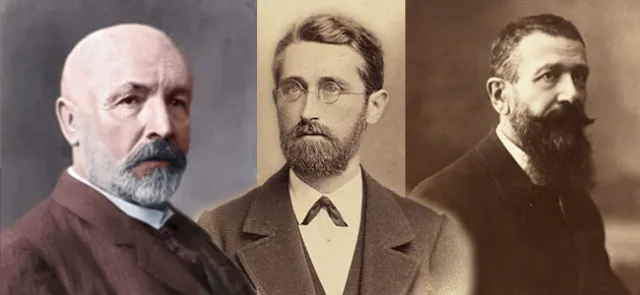
Georg Ferdinand Ludwig Philipp Cantor (1845–1918).