Cantor had already achieved spectacular results in set theory when he turned his attention to several major mathematical conjectures. In particular, he was the first to propose the continuum hypothesis, a result he believed he could prove and whose proof appeared in 1900 on Hilbert's famous list of twenty-three problems. It was not until 1963 that Paul Cohen proved its "independence." The statement reads: there is no infinite set whose cardinality lies (strictly) between that of the integers and that of the real numbers.
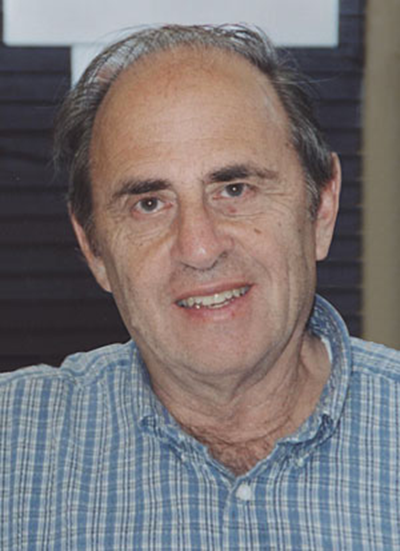
Paul Joseph Cohen (1934–2007).
Between 1884 and 1896, Cantor became fascinated by Goldbach's conjecture, which states that every even integer strictly greater than 2 is the sum of two prime numbers (for example, 6 = 3 + 3, 18 = 5 + 13…). It has defied the mathematical community since 1742, when Christian Goldbach put the question to Euler. It continues to fascinate researchers, especially amateurs!
Several reasons seem to have prompted Cantor's interest. One was simply to find an application for his results concerning subsets of ℝ.